
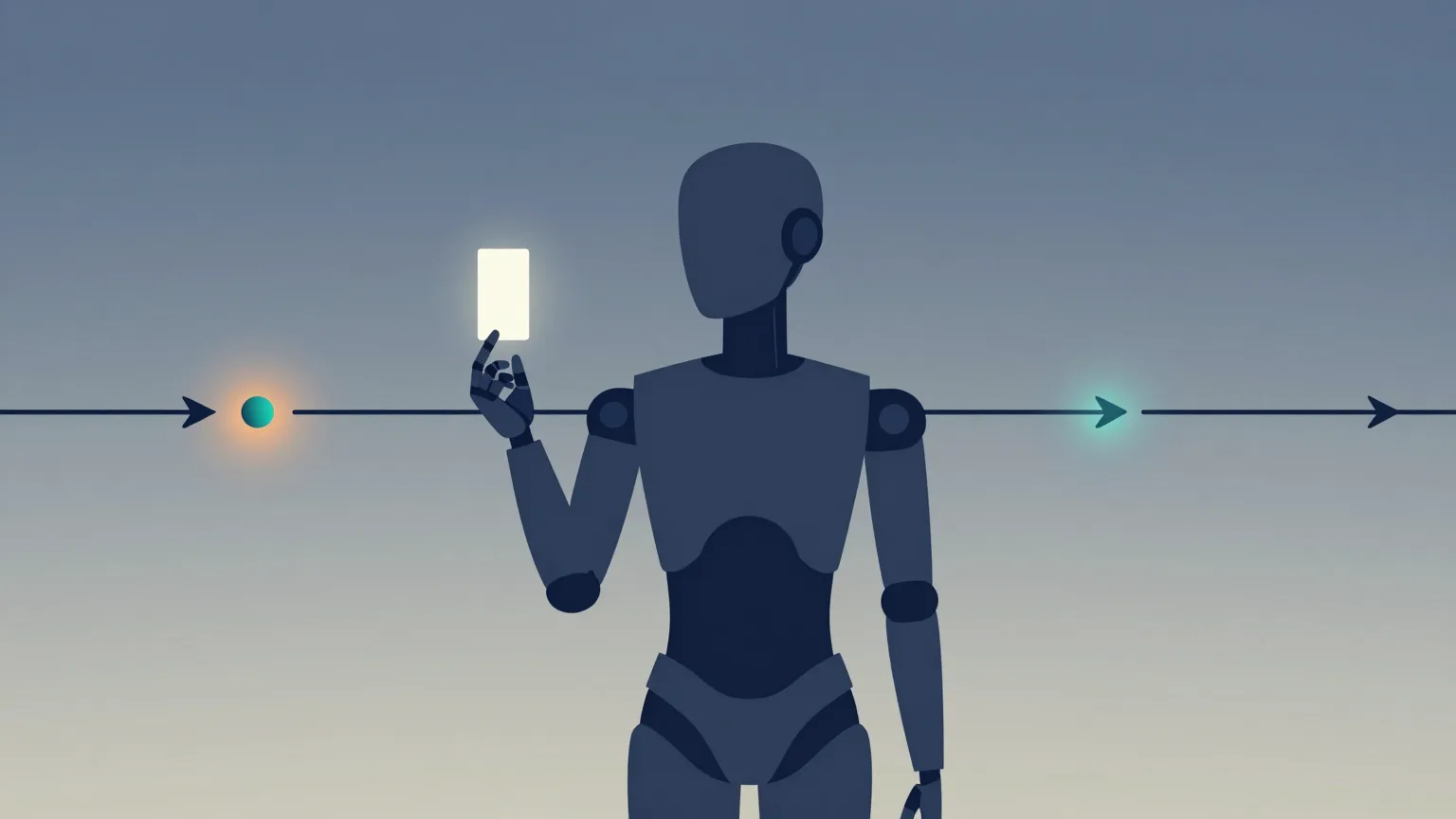
What Is deep_think? — The Idea of Giving AI a 'Place to Think' as a Tool

To cut to the conclusion: deep_think is an agent design idea in which you hand the AI a dedicated tool for thinking, separate from the model's standard thinking. It originated from a post on X by security researcher Can Bölük, and the approach has the model invoke this tool only in situations that call for difficult judgment calls.
When I first saw it, I assumed it was a technique for surfacing the AI's hidden Chain of Thought. But as I thought about it a little, a different use came into view. Rather than a device for peeking at hidden reasoning, could it work as a mechanism that explicitly gives an AI agent a 'place to think'?
[Image: a diagram showing where deep_think fits]
The original post is here. https://x.com/_can1357/status/2090837707069014224
In this post, I'll first pin down the essence of this idea, then walk through why it's especially interesting when used in an 'agent' rather than a chat, and finally how it could extend into a division of roles such as plan and verify.
What Reasoning Models Do Before Answering
Recent reasoning models go through multiple internal processing stages before producing a final answer. Conceptually, the flow looks something like this.
問題を確認
↓
条件を整理
↓
候補を考える
↓
矛盾を確認
↓
回答
That said, not all of this internal processing is shown to the user. And the important point is that the Chain of Thought on display doesn't necessarily represent the model's internal decision-making process with complete fidelity.
Anthropic's research (Reasoning Models Don't Always Say What They Think) also reports that models don't always explain, in their CoT, the information they actually used to reach a decision. In other words, it's dangerous to treat 'the thinking the model wrote' and 'what the model actually used in its judgment' as one and the same.
This property is an important premise for deciding how to interpret deep_think, which I'll explain next.
How to Use deep_think — Structuring Decisions Inside a Tool Call
Concretely, all you do is give the model a tool called deep_think and tell it: 'Use deep_think when you need to make a difficult judgment.'
deep_think({
  "assessment": "...",
  "uncertainty": "...",
  "next_action": "..."
})
The model can then organize its reasoning in the form of tool-call arguments, separate from writing the final answer. The idea is to break its thinking down into fields like assessment (evaluation of the current situation), uncertainty (points of doubt), and next_action (the next step).
What I want to emphasize here is that you shouldn't assume this is 'a device for peering inside the AI's actual brain.' As we saw in the previous section, there's no guarantee that the written-out thinking perfectly matches the actual decision process. It's cleaner as a design to think of it as 'providing an external scratchpad that the model itself can use.'
Similar Implementations Have Already Emerged, Such as internalcot
There's also an open-source implementation called internalcot that takes this idea further. For Codex and Claude Code, it adds a workspace for writing out problem decomposition, intermediate judgments, options, rationale, uncertainties, and items to check into the normal tool transcript.
The README, though, makes an important point. This implementation does not directly read the host-side native reasoning (the model's internal reasoning). It's a mechanism that has the agent itself write 'visible working notes.'
So in terms of positioning, it's not so much a technique for 'stealing hidden thoughts' as a device for 'creating a place to think within the agent's workflow.' The latter aspect is exactly what caught my interest.
Why It's Especially Interesting for AI Agents — 'When to Think' Over 'What to Think'
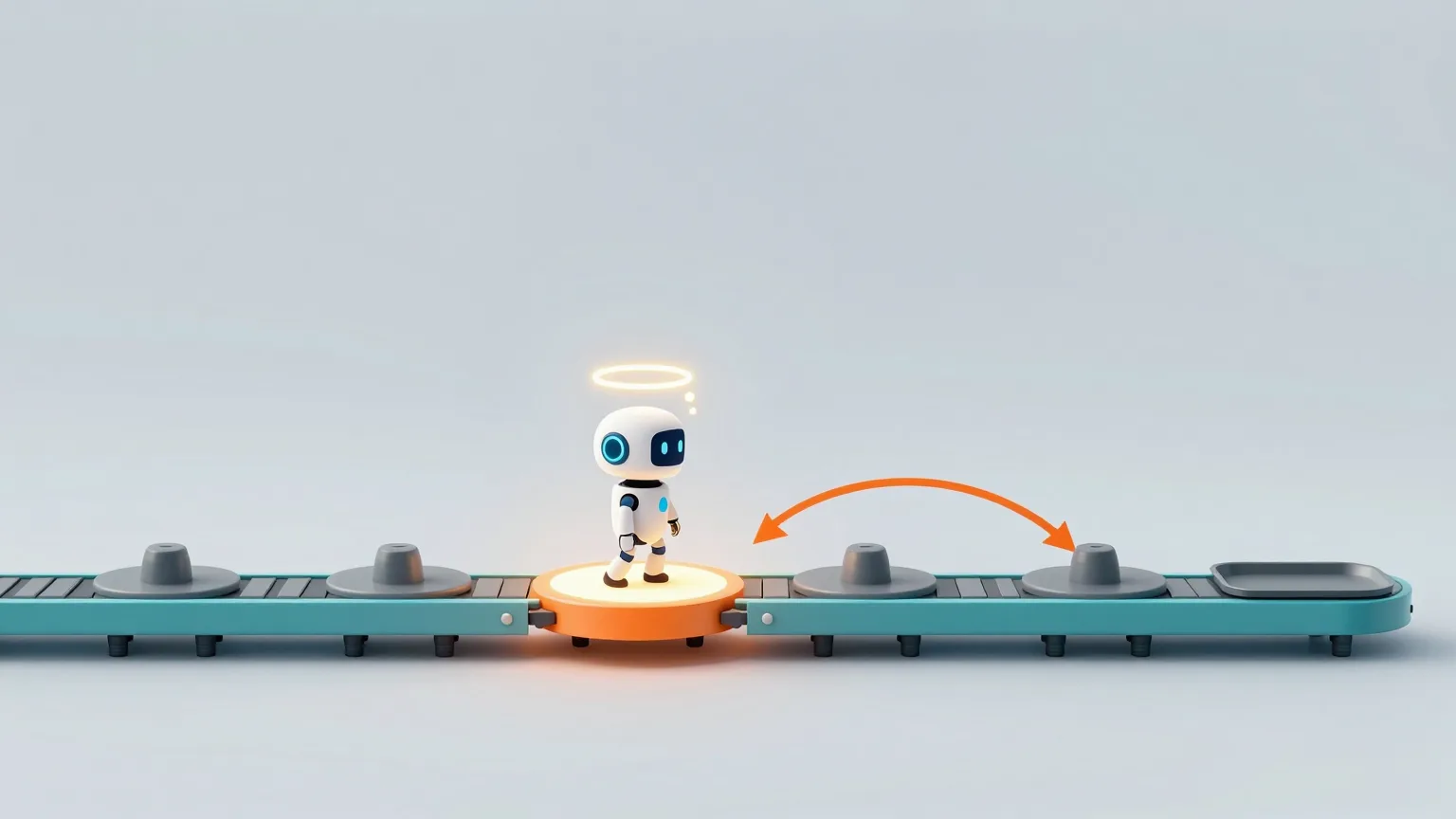
An ordinary AI chat ends with question → answer. An AI agent, however, executes multiple actions in sequence. For example, researching news and turning it into an article might flow like this.
検索
↓
ページ取得
↓
内容を読む
↓
別の情報源を検索
↓
比較
↓
重要度を判断
↓
記事を作る
What matters here isn't just 'what to think' but 'when to think.' For example, once three search results have been retrieved, decisions like the following come into play.
情報は十分なのか?
一次情報はあるのか?
記事同士で内容が矛盾していないか?
別の検索をするべきなのか?
Being able to insert an explicit deep_think at these 'pause-and-decide moments' is what makes agents uniquely interesting. You can create a place for thinking between one action and the next — something that doesn't exist in chat.
[Image: a diagram showing how the processing flow changes with and without deep_think]
How It Changes a News Research Agent (A Concrete Example)
Suppose a standard agent follows a flow like this.
Search
↓
Fetch
↓
Search
↓
Fetch
↓
Answer
Change it to the following.
Search
↓
Fetch
↓
deep_think
↓
必要なら追加Search
↓
verify
↓
Answer
Limit what deep_think is asked to organize to just the following five points.
現在確認できている事実
まだ確認できていないこと
情報源同士の矛盾
追加調査が必要か
次に取るべき行動
Note that the model itself hasn't changed at all. Even so, simply having a place to organize judgments between actions could considerably change how the agent behaves.
The 'Separate Thinking from Acting' Idea in Prior Research
Is the 'thinking tool' a entirely new idea? Not quite. Research combining reasoning and tool use has been around for some time.
ART (Automatic multi-step reasoning and tool-use) studies a scheme in which the model alternates between multi-step reasoning and external tool use, aiming for performance gains even on unseen tasks. And in the recent RecThinker, a design is used in which the model judges whether information is insufficient and autonomously invokes the tools it needs, in a flow like the following.
Analyze
↓
Plan
↓
Act
In other words, the idea of separating the 'thinking phase' from the 'acting phase' already has a degree of empirical backing. What makes deep_think interesting is that it could bring this to agents in an extremely simple form — just hand over a single tool.
What If We Split the Roles? — plan, deep_think, verify, final_review [Hypothesis]
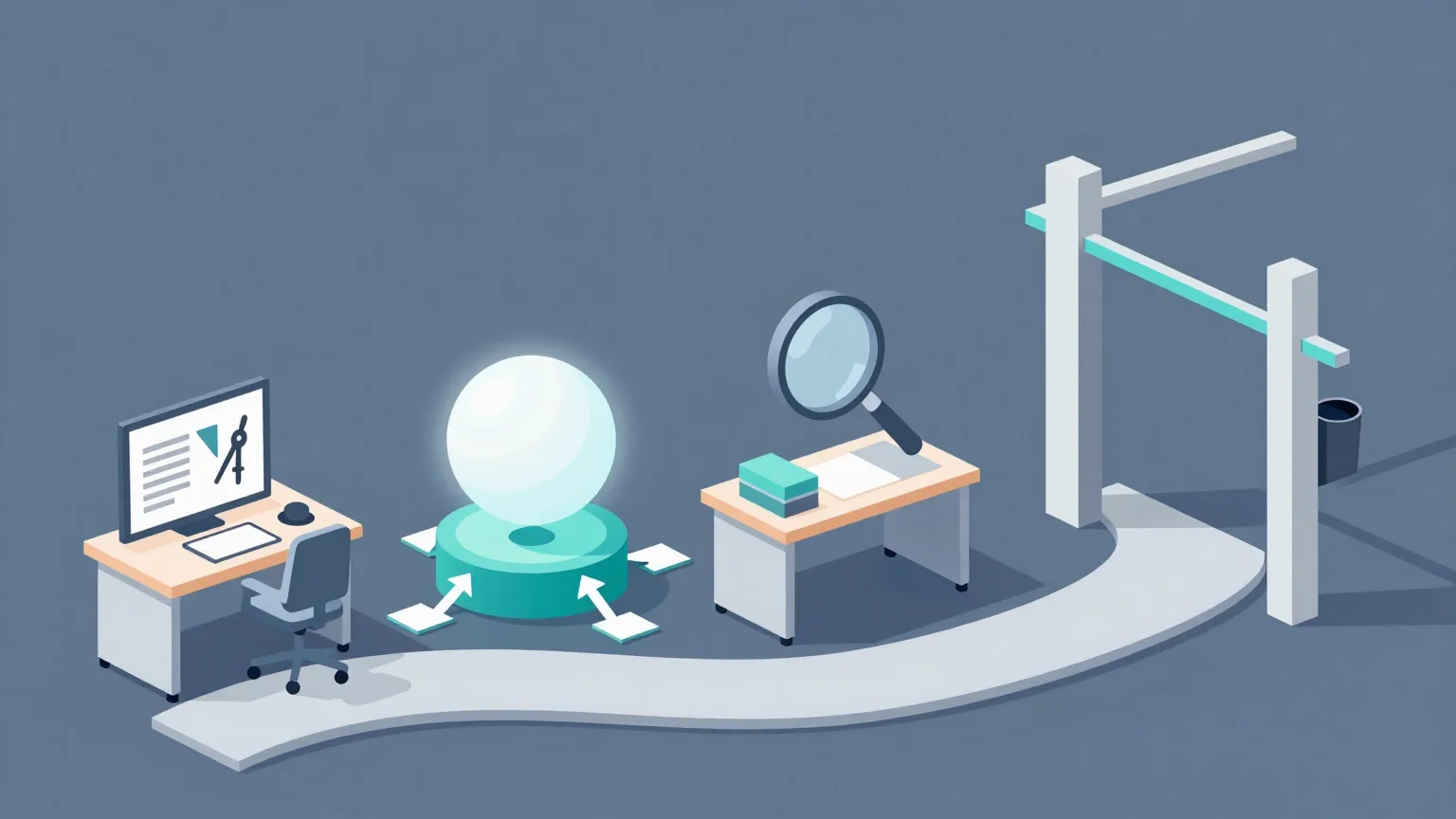
From here on, this is my hypothesis. Instead of deep_think alone, you could have a set of tools with distinct roles — for example, these four.
plan()
deep_think()
verify()
final_review()
Let's lay out each role.
[Image: a diagram showing the role division among the four thinking tools]
plan Decides 'How to Investigate'
What plan determines is the objective, the information needed, the tools to use, and the order of operations. Think of it as having the agent draft a one-page research plan before starting; it isn't required for simple tasks.
deep_think Organizes 'How to Decide'
What deep_think handles are candidate decisions, rationale, missing information, uncertainty, and next actions. Inserted between actions, it writes out in a structured way which option should be taken now.
verify Checks 'Is the Judgment Correct?'
verify checks whether there are primary sources, whether the information is current, whether there are contradictions, and whether the evidence is sufficient. Because thinking and verifying have different goals, it's kept separate from deep_think.
final_review Is Used Only Right Before Actions That Affect the Outside World
final_review is used only immediately before operations with external effects, such as database updates, publishing an article, sending an email, or deleting files. It's a gate for pausing one last time before an action that can't be undone.
Not Making the Model Smarter — Changing How It Works
This is what I found most interesting this time. When trying to improve AI performance, people usually tend to consider the following three options.
もっと強いモデルを使う
thinkingをHighにする
プロンプトを長くする
But there's another way: keep the model the same and change the environment it works in.
The same thing happens with humans. Rather than being told 'get smarter,' people sometimes produce better work when the process is laid out for them, like this.
まず調査してください
次に候補を比較してください
最後に確認してください
The same may hold for AI agents. Depending on the tools you provide and how you design the moments for thinking, even the same model may produce deliverables of different quality.
Trying It with OpenClaw — Adding Just the Thinking Step First
I run a system using OpenClaw that collects AI and tech news and turns it into articles. I decided to actually try this idea out.
If the current processing flow looks like this,
ニュース発見
↓
情報取得
↓
重要度判定
↓
記事生成
change it to the following.
ニュース発見
↓
情報取得
↓
deep_think
↓
必要なら追加調査
↓
verify
↓
重要度判定
↓
記事生成
I'm not changing the model. First, I'll add only the thinking step. Keeping the variables to one is meant to avoid misreading what actually caused the effect.
That Said, It May Not Actually Get Better
Naturally, this isn't a claim that adding deep_think always improves performance. If anything, there are also pathways where things get worse, like the following.
考える回数が増える
↓
処理時間が増える
↓
トークンが増える
↓
コストが増える
What's more, the model might think more than necessary and end up making worse decisions. Overthinking is poison, for models just as for humans.
That's why what matters is actually comparing the two. Next time, I'll work through concretely how I would design the addition of deep_think to OpenClaw.
Conclusion: A New Design Axis — Designing the Thinking Environment
It's a bit of a waste to see Can Bölük's post only as 'a trick for extracting an AI's secret thoughts.' What interested me, rather, is the part about giving AI 'a place to think' as a tool.
Beyond model performance, the following four points also become design targets.
いつ考えるか
何について考えるか
いつ調べ直すか
いつ検証するか
I have a feeling that this 'thinking environment design' will become quite important in building AI agents going forward. Next time, I'll design concretely how to integrate it into OpenClaw.
References: the original post by Can Bölük (https://x.com/_can1357/status/2090837707069014224), morluto/internalcot, ART: Automatic multi-step reasoning and tool-use for large language models, Reasoning Models Don't Always Say What They Think
Note that the latter half of this post, 'applying deep_think to agent design,' is not something the original post demonstrated; it is a hypothesis I came up with after seeing the post.