
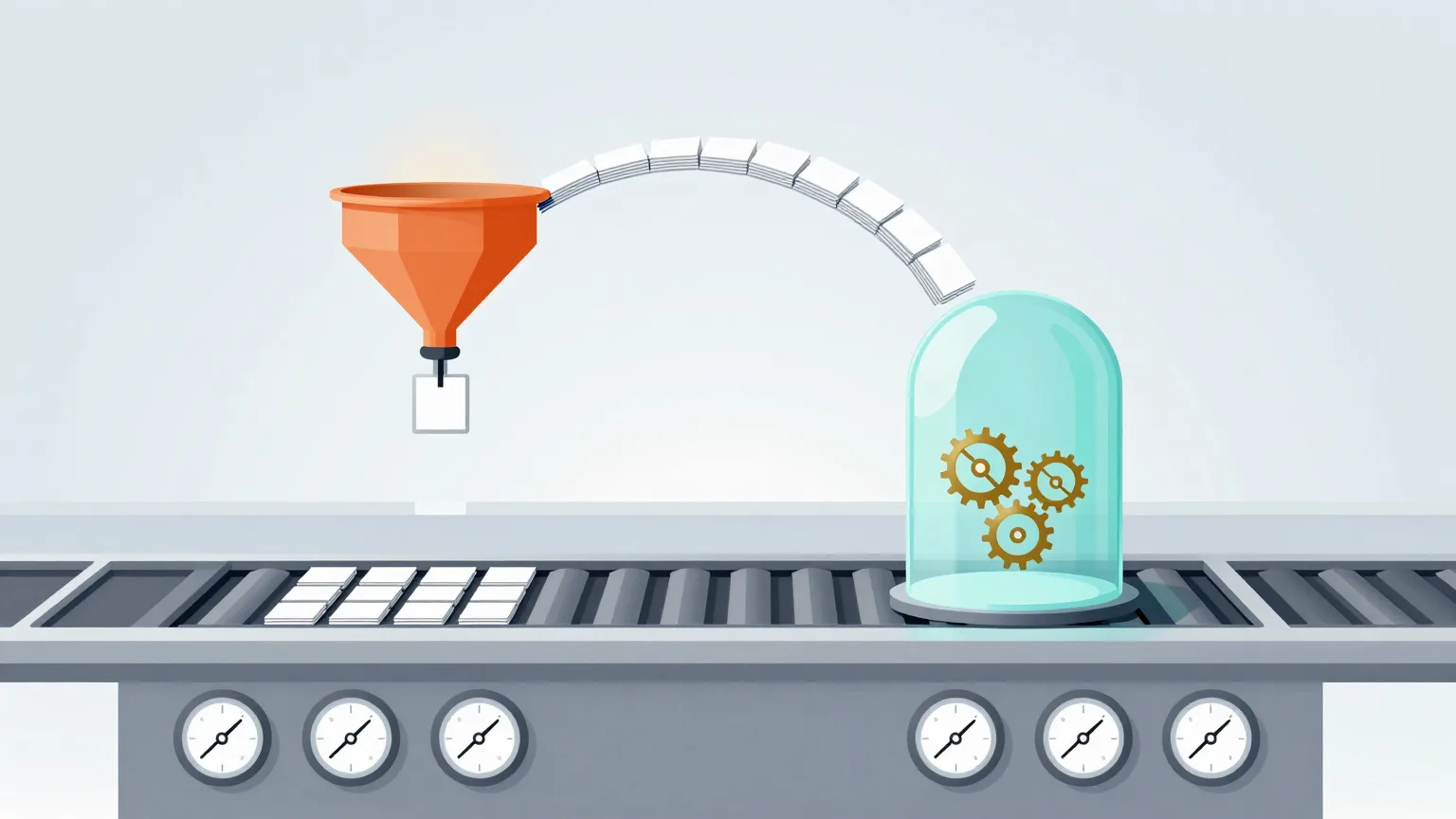
The Experimental Question — Do Thinking Tools Actually Make an Agent Smarter?
In Part 1, starting from the deep_think idea, we explored what happens when you give an AI agent a place to think. In Part 2, we laid out a design for adding three processes—plan, deep_think, and verify—to OpenClaw.
But everything so far is a hypothesis. The crucial question remains unanswered. From this installment, we take on the question: 'Does that actually make a difference?'
This article designs an experiment to verify the effect with numbers rather than impressions. At this stage, no performance improvement has been confirmed; once measured results are in, I plan to publish them as an update to this post or as a follow-up.
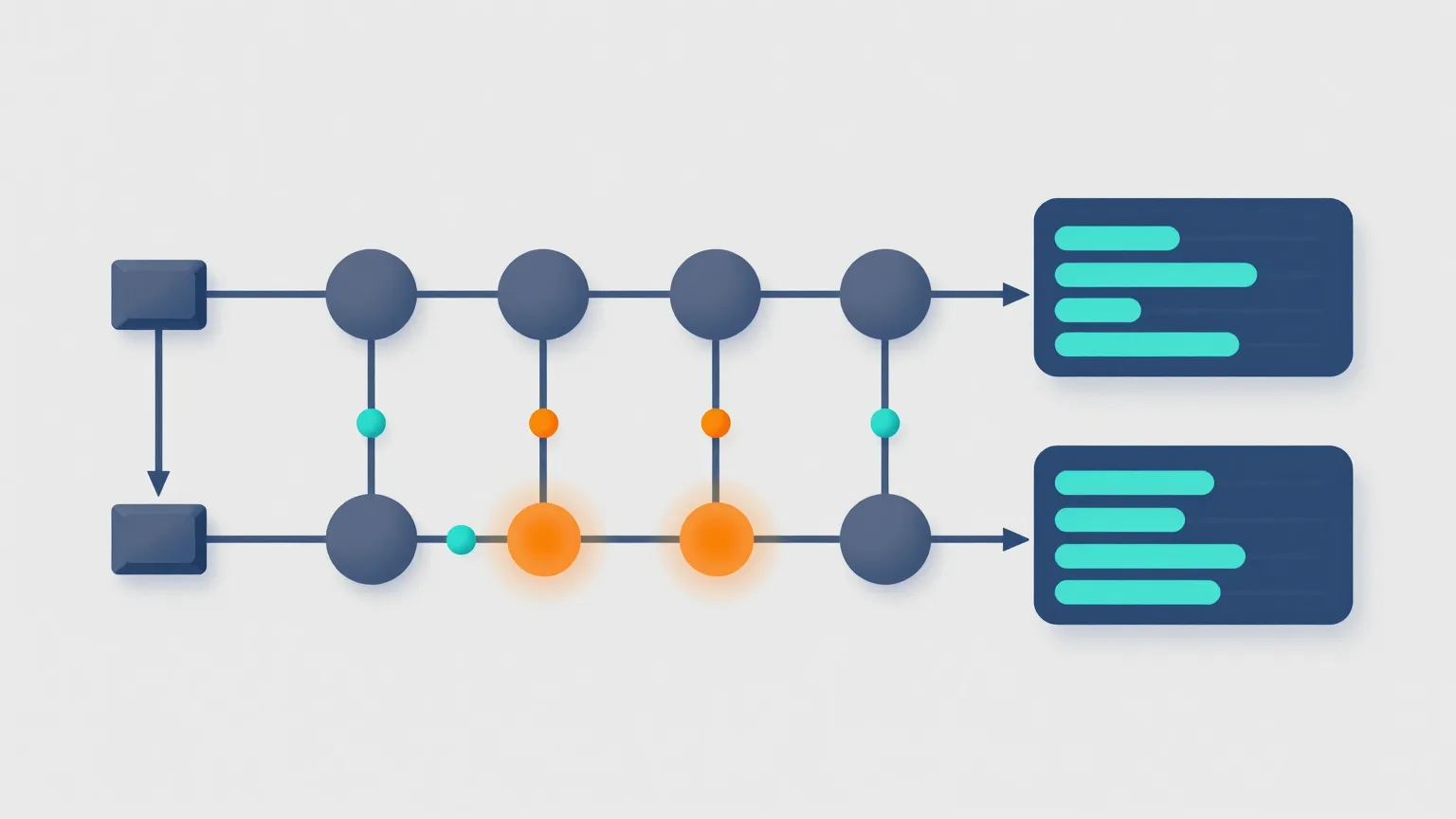
[Image: a diagram showing the overall structure of the A/B test]
Banning 'It Feels Smarter' — The Basic Principle of Evaluation
The most dangerous thing in AI evaluation is the impression that 'it seems smarter than before.' Even if you try a few cases and think 'wow, it's really thinking,' that alone proves nothing.
With deep_think in place, the logs will naturally make it look like the agent is thinking a lot. But thinking longer and being correct are two different things.
Anthropic's CoT research has also shown that the reasoning a model writes out is not always a faithful representation of what actually drove its decisions. So this time, we look only at final outcomes, not at how the process looks. That is the basic principle of this experiment.
Building A and B — The Configurations to Compare and the Conditions to Hold
Start with two configurations to compare.
A is the standard build—the current OpenClaw.
ニュース発見
↓
取得
↓
評価
↓
記事生成
B is the Thinking Tools build, which interleaves deep_think and verify.
ニュース発見
↓
取得
↓
必要ならdeep_think
↓
追加調査
↓
verify
↓
評価
↓
記事生成
The key is to keep the model identical. If you change the model as well, you can no longer tell whether the result means 'deep_think worked' or 'the model got stronger.' In a comparative experiment, isolating a single variable is the iron rule.
Processing the Same 50 Items — How to Skew the Test Data
First, prepare 50 candidate news items and give the same 50 to both A and B.
Ideally, the set should mix difficulty levels, as described below.
明らかに簡単なニュース
一次情報があるニュース
複数サイトで内容が違うニュース
発表日が曖昧なニュース
似た記事が大量に出ているニュース
重要度判定が難しいニュース
The reason is simple: if the set contains only easy cases, adding deep_think will produce no difference. Deliberately including cases where a difference should show up is part of the experiment design.
The Seven Metrics to Measure

This time we measure the following seven metrics, ordered by importance, with notes on how to read each one.
1. 事実誤認率
2. 一次情報到達率
3. 重複率
4. 重要ニュースの取りこぼし
5. 検索回数
6. トークン・コスト
7. 処理時間
The definitions and judgment criteria for each metric are shown below.
[Image: an overview of the seven metrics and how to read them]
1. Factual Error Rate — The Most Important Quality Metric
The most important metric. Check for errors in dates, product names, company names, prices, supported models, specifications, and so on. For example, if 5 of the 50 items contain errors, the factual error rate is 10%. How this number moves with and without deep_think is the core of the experiment.
2. Primary Source Reach Rate — Measuring the Effect of verify
Measure whether the agent stops after reading news articles, or whether it reaches official blogs, official documentation, GitHub, papers, and company announcements. If adding verify improves this reach rate, turning the step into a tool carries real weight.
3. Duplication Rate — Counting Duplicate Adoption of the Same Event
Duplication tends to be a problem in AI news. 'OpenAI announces a new feature,' 'New capability for GPT,' 'ChatGPT update,' and 'OpenAI rolls out new feature' can all be the same story. Treating them as four separate items is duplication. We check whether deep_think's 'isn't this the same event as an existing item?' check actually works.
4. Missed Important News — The Counterweight to False Adoptions
There is no point in chasing precision alone by repeatedly discarding anything that 'looks fishy.' Also measure how many items that should have been adopted were dropped. Only by looking at both false adoptions and misses do you get a balanced evaluation.
5. Number of Searches — Measuring the Cost of Overthinking
If deep_think can judge 'I've researched enough,' the number of searches may decrease. Conversely, if it keeps doing 'one more just in case,' it increases. For example, if A averages 4.2 searches and B averages 6.8, that is a substantial cost paid in exchange for better accuracy.
6. Tokens and Cost — Record Everything You Can Capture
Record everything you can capture: input tokens, output tokens, reasoning, tool calls, and so on. If A is 100 and B is 112, that is a 12% increase. If misinformation drops sharply as a result, that might be acceptable, but 'cost +60%, accuracy +2%' makes adoption a tough call.
7. Processing Time — The Impact of Extra Round Trips
Every insertion of deep_think adds round trips between the LLM and the tools. With 50 news items the difference may be negligible, but at hundreds of items per day it becomes a number you cannot ignore. It is a surprisingly important metric for agents.
Also Watch deep_think's Usage Rate — A Sanity Check on the Trigger Conditions
In B, we additionally record one more metric: deep_think_usage_rate.
For example, if it is used on only 8 of the 50 items, the usage rate is 16%. If accuracy is up, you could call it a highly efficient mechanism: 'only the difficult 16% needs extra thinking.'
Conversely, if it fires on all 50 of 50, the trigger conditions designed in Part 2 may be too loose. The usage rate is a metric that tells you about the soundness of the tool's design itself.
Can confidence Be Trusted? — Calibrating Self-Reports
We have deep_think record confidence_before and confidence_after.
Say a case goes 'before 0.55 → additional search → after 0.92.' If accuracy on those cases is genuinely higher as well, confidence can be used as an operational decision signal.
But if 'confidence 0.95 → wrong' happens frequently, confidence itself is meaningless. How closely a model's self-assessment matches its actual correctness should turn out to be a fairly important finding for real-world operation too.
Deciding What Counts as 'Success' Before You Run It
If you declare 'this is a success!' after seeing the results, you will end up grading them in your own favor. So decide the criteria before running the experiment.
Personally, I would set the following as a rough benchmark.
事実誤認: 20%以上改善
重複: 20%以上改善
重要ニュース取りこぼし: 悪化しない
追加コスト: 20%以内
You don't have to meet every condition—judge by the balance between quality gains and cost increases. Drawing the line in advance is the simplest way to prevent after-the-fact rationalization.
Also Comparing C (Prompt-Enhanced) — Testing Whether Tooling It Matters
If you have the bandwidth, you can build a third comparison target: C, which adds no tools and simply puts the following into the system prompt.
重要な判断では
十分に検討し、
事実確認をしてから進んでください
This lets you compare A (standard), B (deep_think + verify), and C (prompt-only enhancement).
This comparison matters a great deal. If B and C are nearly identical, there is little point in going to the trouble of implementing tools. On the other hand, if B substantially outperforms C, it raises the possibility that separating the thinking step out as a tool has value in itself—beyond simply telling the model to 'think.'
Can a Weaker Model with a Better Workflow Approach a Stronger Model?
Honestly, there is something I want to know even more than simple accuracy gains: 'If you improve the workflow, can even a weaker model get close to a stronger one?'
For example, compare 'strong model + simple agent' against 'slightly weaker model + plan + deep_think + verify.'
If the latter delivers comparable performance, that is interesting. It could mean raising the quality of the entire agent while keeping API costs down.
Augmenting model capability through tool-augmented reasoning has been studied for some time; ART reported performance gains across multiple tasks by combining reasoning and tool use on a fixed LLM. Recent agent research also explores designs in which the agent judges when information is lacking and autonomously uses additional tools. This experiment is essentially a personally-run version of that question.
After the Model Race Comes the 'Agent Design Race,' Perhaps
In the AI world, new models, new benchmarks, and new reasoning capabilities make headlines almost weekly. Model performance matters, of course.
But once you use AI for real work, you realize that is not the whole story. The following factors all affect the outcome as well.
検索能力
コンテキスト
メモリ
ツール
検証
リトライ
権限管理
ログ
停止条件
If the model is the 'brain,' you might say agent design is the workplace itself. My hypothesis throughout this series is that an era of competing on workplace design is coming.
If It Works, What Next — Applying It to Other Agents
If the effect is confirmed, it can be applied to other agents too, not just news collection.
For product data collection, call deep_think only when 'the weight differs across sites,' 'the release year differs,' 'a product with the same name exists,' or 'official specs cannot be found.'
For a coding agent, make it think only when 'there are multiple ways to fix this,' 'the blast radius is large,' 'tests failed,' or 'it contradicts the existing design.'
In other words, the mechanism that lets the agent itself decide 'when to think deeply' may end up mattering more than the deep_think tool itself.
Conclusion: Try It, Measure It, and Record What You Learn
This three-part series began with a single X post. It started as 'can we see AI's hidden thoughts?' From there came the idea 'what if we provided a place to think as an external tool?' which developed into an agent design built on plan, deep_think, and verify.
And where it finally arrived was the obvious: 'if it really works, let's confirm it with numbers.'
The answer at this point is 'we don't know.' And I think that is the right answer. It is an interesting idea, the logic holds up, and similar research exists. But whether it works on my own OpenClaw is a separate question. So we measure it for real.
Even a result of 'no effect' would be interesting enough. 'I thought giving AI thinking tools would make it smarter, but in practice almost nothing changed' would make a perfectly respectable lab note. This is a lab, so it does not have to succeed. Try it, measure it, and record what you learn.
References: the original post by Can Bölük (https://x.com/_can1357/status/2090837707069014224), morluto/internalcot, ART: Automatic multi-step reasoning and tool-use for large language models, RecThinker: An Agentic Framework for Tool-Augmented Reasoning in Recommendation, Reasoning Models Don't Always Say What They Think
Note that this article covers the design stage prior to the experiment; no performance improvement has been confirmed. Once measured results are in, I plan to publish them as an update to this post or as a follow-up.