
November 15's overseas AI news was a day when regulatory developments took center stage. In the U.S., the effort to close off the path that lets Chinese AI companies "rent" Nvidia GPUs at overseas data centers has entered its final stage, and the open LLM community is stirring. The wave of Nvidia coverage that has continued since last week's sudden resignation has also gained an investigative story from a new angle.
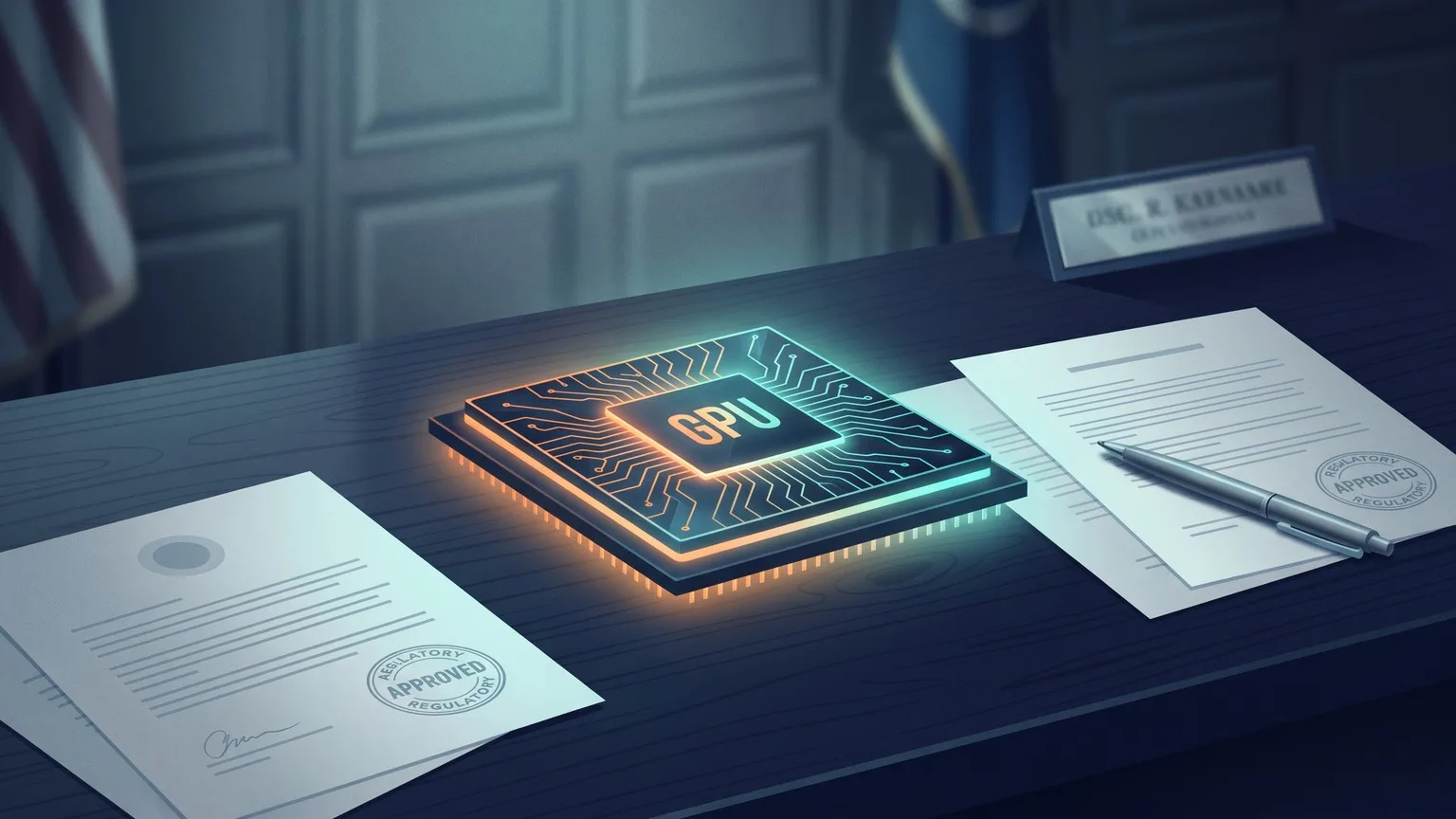
Commerce Department Moves Toward Final Rule, House Passes RASA — Cutting Off Chinese AI Companies' Remote GPU Use
Drawing attention on Reddit's LocalLLaMA community is a thread warning that two U.S. regulatory developments will bring "chaos to open LLMs and beyond."
The first is the Commerce Department's move. It was reported that the department is finalizing a rule to block Chinese AI companies from renting and using Nvidia GPUs at overseas data centers. The second is the "Remote Access Security Act" (H.R.2683), passed by the U.S. House of Representatives — a law restricting adversaries' remote access to critical technologies, known by its acronym RASA.
Existing export controls have mainly focused on preventing the physical shipment of chips out of the country. Renting overseas GPUs by the hour through the cloud, meanwhile, has long been flagged as a loophole that slips through that net. Once both the final rule and the law are in place, Chinese companies will effectively lose the path to borrowing the compute power of U.S.-made GPUs.
In the LocalLLaMA thread, commenters have raised concerns that the impact could extend to the entire ecosystem surrounding open LLMs. The final text of the rule and its enforcement timeline are unknown at this point, so the actual scope of the impact will have to wait for future official notices.
WSJ Report: Huang Built the "Backdoor Route" That Keeps Beijing in the AI Race
One week after his sudden resignation, Jensen Huang (former Nvidia CEO) is the subject of a new investigative report from the Wall Street Journal. Titled "How Jensen Huang Built the Backdoor Route That Keeps Beijing in the AI Race," the article argues that Huang built a "backdoor route" that allowed China to keep developing AI outside the bounds of export controls.
The focus of coverage around the resignation drama has shifted little by little — from an investigation stemming from espionage suspicions, to an agreement to testify before Congress, to allegations of "circular financing" that staged a GPU shortage. This WSJ report can be seen as turning the light on the very structure of GPU supply to China underlying it all. Whether each individual allegation is true will have to await further investigations and testimony, but the report looks like a key piece for understanding what the board judged to be the problem.
Anthropic Acquires a "One-Person" AI Biotech — Nature Report
Nature reports that Anthropic has acquired a biotech company. What draws attention is its scale: the acquired company was run entirely by a single person, leveraging AI heavily.
There is something symbolic in the fact that a company heading toward a record-setting IPO chose a "one person + AI" R&D model as its acquisition target. If generative AI boosts research productivity, even a single person — let alone a small elite team — can deliver value. That narrative started being discussed in the bio space in the context of last week's "A DeepSeek Moment for Biotech," and what has now appeared is a major AI company directly absorbing that outcome through M&A. For details on the acquisition price and research topics, the Nature article itself is the place to check at this point.
ChatMate: Remote Prompt Execution from an AI Assistant's Sandbox
On the security front, a disclosure called "ChatMate," demonstrating sandbox escape in AI assistants, has been shared. It is a live demonstration of a technique in which the assistant breaks out of the chat UI's sandbox and executes an attacker's prompts remotely.
The more AI assistants take on browser operation and code execution as agent capabilities expand, the more "can it get outside the sandbox?" becomes a matter of life and death. This is a demonstration-based report, and the range of affected products and available countermeasures is unclear at this point — but it is a reminder of the awkward reality that the more convenient AI becomes, the wider its attack surface grows.
IBM's Mainframe AI Accelerator "Spyre" — 128GB of LPDDR5 at 75W
IBM's publicly available zSystems documentation reveals an AI accelerator card called "Spyre." Despite being a 75W PCIe card, it comes in a configuration with 128GB of LPDDR5 memory.
There are two points worth noting. One is the "128GB at 75W" configuration itself: large-memory cards that fit into slots requiring no auxiliary power offer a realistic path for bringing LLM inference into existing systems that cannot add GPUs. The other is that it targets zSystems (mainframes), pointing toward a direction of completing AI inference entirely within existing infrastructure in industries such as finance and government, where data cannot be sent outside. It is worth remembering as one example of the enterprise AI trend toward "self-contained execution in closed environments."
LLM Agents on Long-Horizon Tasks "Write Things Out in Order to Forget" — CORAL
On the research side, "Don't Lose the Thread," presented at the COLM 2026 conference by a joint team from CUHK, Tencent, and HKUST, is an interesting one. The proposed method, CORAL, addresses the problem of context that keeps ballooning in ReAct-style agents during long-horizon tasks through "cognitive offloading."
In ReAct-style agents, context piles up every time the thought-action-observation loop cycles, and much of it, the paper says, is the debris of failed searches. Where a human would take notes and tidy up their desk, the agent keeps reading through its entire history, unable to throw anything away. CORAL builds a mechanism for the agent to organize its working context on its own by writing out important information. It is a near-real-world approach to the "messy desk" problem that arises when running AI agents over the long term.
---
From regulation, reporting, and acquisitions to security, hardware, and research, today was a wide-ranging day. As for what the regulations on remote GPU use will actually bring to the open LLM community, we will be watching how things unfold over the coming weeks.