
Spare GPUs from gamers, Nvidia's organizational security, and the plain question of whether models have actually gotten smarter — here is a roundup of the news collected around noon on November 15 (Japan time). What stands out is that a new vision for AI compute demand and the topics of “trust and verification” around AI advanced at the same time.
Microsoft's Patent — A Scheme to Train AI on Idle Gaming PCs and Pay Rewards
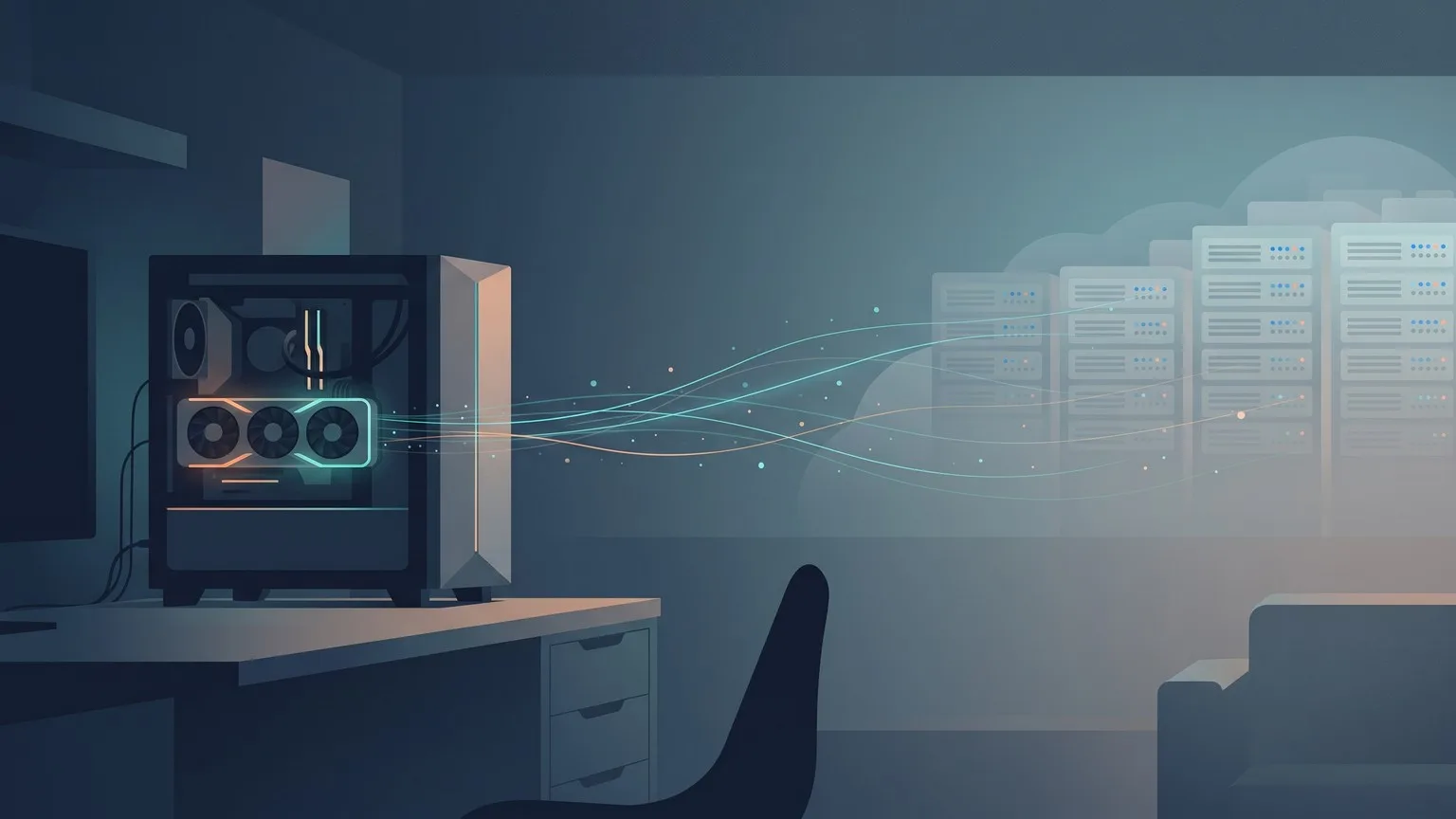
According to PCMag, a patent filed by Microsoft describes a system that would put the spare GPU capacity of gaming PCs to work on AI training during the hours they aren't being used for gaming, offering users rewards in return. VideoCardz likewise reports that “Microsoft may pay gamers rewards in exchange for using their spare GPU capacity for AI training,” and the story is also making the rounds on r/LocalLLaMA.
The patent is, at this stage, purely a filed concept — not a commitment to a product. The angle is interesting, though. Compute demand for AI training keeps deepening its reliance on data center construction, and the cost and power that entails remain a persistent concern. Against that backdrop, turning to “idle GPU time sitting in people's homes” as a supply source reads almost like a counterproposal to the cloud-first supply structure. In the same week, voices on r/LocalLLaMA were arguing that “local AI is the future, cloud AI is the problem,” so this amounts to a proposal arriving from the cloud side, in the opposite direction.
That said, the practical questions — what the reward terms would be, how running training jobs would affect electricity bills and GPU lifespan, how home networks would be treated — have no answers at this point. It seems safe to say this is still at the stage of an idea to watch from a distance.
Nvidia Follow-up — Security Chief Left in August; “Information Leaking Through Everyday Conversation Can't Be Stopped with Standard Tooling”
The turmoil around Nvidia has gained a new angle. According to TechCrunch's analysis piece “Where was Nvidia's security team?”, the company's security chief quietly stepped down back in August. With Jensen Huang (former CEO) having resigned as CEO over personal relationships — including ties to executives at a company under investigation on suspicion of smuggling chips to China — the question now being raised is what the security team was doing in the first place.
In the same article, a former intelligence officer points out that this kind of information leak is the sort that happens in everyday conversation, and that most corporate security teams have no tooling to catch such leaks. The assessment: rather than a “hole in the guard rails,” this was a risk sitting outside the design assumptions of ordinary corporate security. While emotionally charged developments continue — the petition calling for his return has passed 110,000 signatures (see our previous roundup) — a different reading has now emerged: a lesson viewed from the defensive side of the organization.
“Did Post-Training Make Models Dumber?” — An Unease That Surfaced on Ask HN and r/LocalLLaMA at the Same Time
A thread titled “Ask HN: Is post-training making AI models dumber?” went up on Hacker News. In the poster's telling, post-training has improved benchmark scores and seemingly made coding more consistent, yet in actual use the models feel, if anything, dumber. Three observations follow, described as especially visible with Claude.
First, the agent cannot write natural language: it dodges technical terms like “callee” and retreats into vague phrasing such as “What the caller calls.” Second, it cannot manage encapsulation, so the code always ends up spaghetti. Third, afraid of breaking existing code, it refuses to restructure and simply piles workaround upon workaround. Worse, rules and coaching don't help — ask it to “keep it simple” and the output gets longer; add a rule and it gets honored only to the letter, like a monkey's paw wish.
Around the same time, a post on r/LocalLLaMA titled “frontier models aren't actually getting that much smarter” drew attention. Writing from experience as an SWE, as a hobbyist user of local models, and as a practitioner who ships AI in products, the poster argues that LLMs have become enormously more useful but their “raw intelligence” has not improved as much as overall performance implies. In production harnesses, switching to a new frontier model barely changed the results, and most failures traced back to context engineering and the tooling. The same model scores dramatically differently depending on the harness. And with local small models having improved so much, the poster says they have begun to question “the number of parameters needed for efficient problem-solving” itself.
Both discussions share the same starting point: the gap between felt experience and metrics. Benchmark numbers keep climbing while the hands-on impression of users fails to keep up. Whether the real cause of that dissonance is a change in the models or a change in user expectations, the evidence to decide isn't in yet. Still, the observation that much of the felt progress of the past 12–24 months comes from the combined strength of “model plus harness” rather than the “model alone” looks like useful material for rethinking how we pick and evaluate models.
Educational Game Development Program Ends Amid a Rush of AI Submissions
According to PC Gamer, an educational game development program has been forced to shut down as students submit a stream of games “made entirely with AI.” The premise of a development contest is to show, through the work itself, what the participant has learned. Once it becomes impossible to tell whose learning a submission proves, it isn't the judging criteria that collapse — it's the conditions for participation themselves. Rather than adding a rule banning generative AI, the organizers chose to bring the curtain down.
Top Scorer of South Korea's Tax Accountant Exam Confesses to Cheating with AI
According to the Chosun Ilbo (English edition), the top scorer in South Korea's tax accountant exam has confessed to cheating with AI. A debate over the reliability of the exam was inevitable. The details of the method, and how the score and qualification will be handled, are unknown at this point — we'll be watching how this develops.
---
A scheme for spare GPUs, a blind spot in security, a gap between felt experience and metrics, unverifiable contest entries — today's topics seemed to be held together by a single thread: the cost of trust. Compute resources, organizational defenses, model intelligence, submitted work — each is entering the stage of being appraised for how much it can be trusted. Also worth flagging: The Economist ran a feature on whether the AI boom can generate enough revenue to sustain itself, and Variety reported from behind the scenes of the first-ever “AI Music Awards.”