
Here are six overseas AI stories as of September 26 (late night JST), starting with a major partnership between a university and an AI company.
Oxford Grants OpenAI Permission to Train on the Bodleian Library
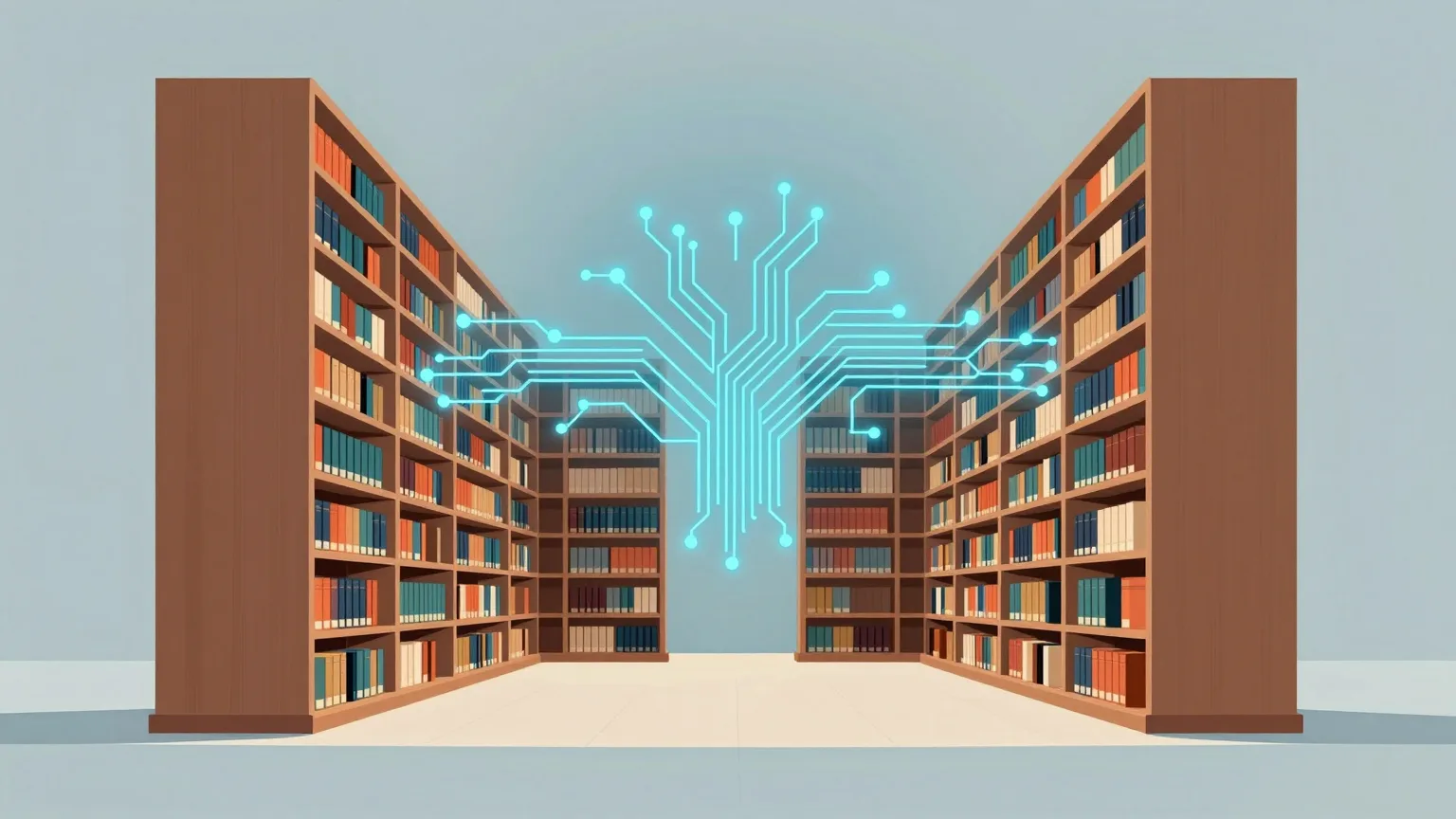
According to The Guardian, the University of Oxford has granted OpenAI permission to use its Bodleian Library for training AI models. With a history stretching back more than 400 years, the Bodleian is one of the UK's foremost research libraries, and the fact that its collections will become training data for a commercial AI model gives this deal a significance that goes beyond an ordinary university–corporate partnership.
How far academic institutions should open their accumulated materials to private companies for model building is a contested issue around the world, touching on copyright and the handling of cultural heritage. The terms of the agreement and any compensation have not been reported at this point, and we'll be watching for follow-ups, including the ripple effects on other universities and libraries.
Mistral CEO: "AI Is Software. It Can Be Controlled"
Arthur Mensch, CEO of France's Mistral AI, said in an interview with Le Monde that "AI is software, and it can be controlled." The remarks drew a notable reaction on Hacker News, picking up 74 points and more than 100 comments.
Against the popular image of AI as an "uncontrollable entity," his position appears to be that, being software, it can be handled with the engineering practices built up over the years. As debate over EU AI regulation grows harsher, it will be worth watching how the message from the head of a major European AI company — control over regulation — is received in the policy discussion.
Google's "Orbital AI Data Center" Demo — A Satellite with 4 TPUs and 1,000W of Solar Power
According to Tom's Hardware, Google is moving ahead with launching an experimental AI data center into satellite orbit, with the first satellite carrying 4 TPUs powered by 1,000W of solar generation. With power grids and land availability becoming bottlenecks for AI infrastructure expansion on the ground, the idea of looking to space for the facility may seem abrupt, but it makes sense as part of the larger trend.
In space there is no attenuation of sunlight by clouds, so solar panels can always count on output near their maximum — though the challenges of heat dissipation, maintenance, and launch costs are self-evident. This is strictly a small-scale demonstration starting with 4 TPUs, not a picture of a production data center, but the approach to the "power wall" is a unique experiment.
Meta's AI Glasses Move Processing into Territory "Even the Company Can't See"
According to unite.ai, Meta has extended its Private Processing mechanism to AI glasses as confidential computing. The idea is to process camera and microphone data in a form that even Meta's servers cannot peek into.
Because AI glasses are devices worn all the time, distrust over privacy could be the biggest barrier to adoption. The success or failure of this approach — technically guaranteeing that "not even the company can see" — is likely to determine the credibility of Meta's entire AI glasses strategy.
Don't Blindly Trust AI-Generated Code — Type Systems, Formal Verification, and Agents That Prove Their Work
As the use of AI coding spreads, moves addressing the question of "how do you guarantee the correctness of generated code" stood out. An article published on the JetBrains community applies type systems and formal verification to AI-generated code, advocating a stance of "don't blindly trust." Rather than waiting for models to become more accurate, it takes the position of leaning on the verification tools software engineering has cultivated over decades.
Pushing the same current from the implementation side is Keel, an AI coding agent featured on Show HN. Version 0.10 has just been released, and it aims to have the agent itself present the results of its work in a provable form. Meanwhile, there was also an account from someone who says they "do AI coding directly in production and have no intention of going back." The current of guarding tightly with verification and the current of pushing ahead speed-first exist side by side; which is right depends on tolerance for cost and risk — but one thing is certain: "generate and done" no longer cuts it.
From Japan: Agent Accident Prevention Shifts from "Documents" to "Hooks"
On Qiita, two hands-on articles on operating AI agents safely were published in quick succession. One uses an n8n case study to discuss separating "the work you delegate" from "the permissions you grant" and designing oversight and logging. It points out the danger of excessive permissions — handing over the ability to delete customer information when all the agent needs to do is leave a note for the customer — and translates the principle of least privilege into workflow design.
The other is an account from the developer of こどもニュース, a news site for children. Even when they handed the coding agent a document of "things not to do," the agent read it and then crossed the line anyway. So they switched to a design that mechanically blocks, via pre-execution hooks, the very patterns of operation that lead to accidents. Like the agent-only inbox we covered recently, the shift from "instructions and warnings" to "stopping it structurally" is advancing in Japanese-language practice as well.