
Your morning roundup for September 19. Moves around 'independent evaluation' of AI suddenly got concrete. Anthropic has partnered with Accenture and is launching 'embedded evaluation' — placing evaluators inside the company — as its first form. California also moved ahead with an executive order demanding independent auditors inside AI labs and a 'kill switch' for models. Meanwhile, reports emerged that a false AI report nearly triggered a US military intercept of a Chinese vessel, making it starkly clear that institutionalizing evaluation and safety is urgent. On the consumer side came Google's household agent 'CC' and Muse for Mac; on the developer side, Jev's rollout in Japan continued; and AI data center firm Nscale filed for an IPO.
Anthropic Partners with Accenture on Its First Initiative to 'Embed Evaluators In-House'
According to [Anthropic's announcement](https://www.anthropic.com/news/accenture-embedded-evaluation), the company has partnered with Accenture to advance independent evaluation of frontier AI. This is the first step toward the commitment CEO Dario Amodei made in his essay 'We Must Pace the Frontier' to 'embed evaluators' inside Anthropic. The partnership is led by Faculty, Accenture's specialist AI business, which will handle model evaluations and red teaming, alignment assessments, and safeguards testing, among other work.
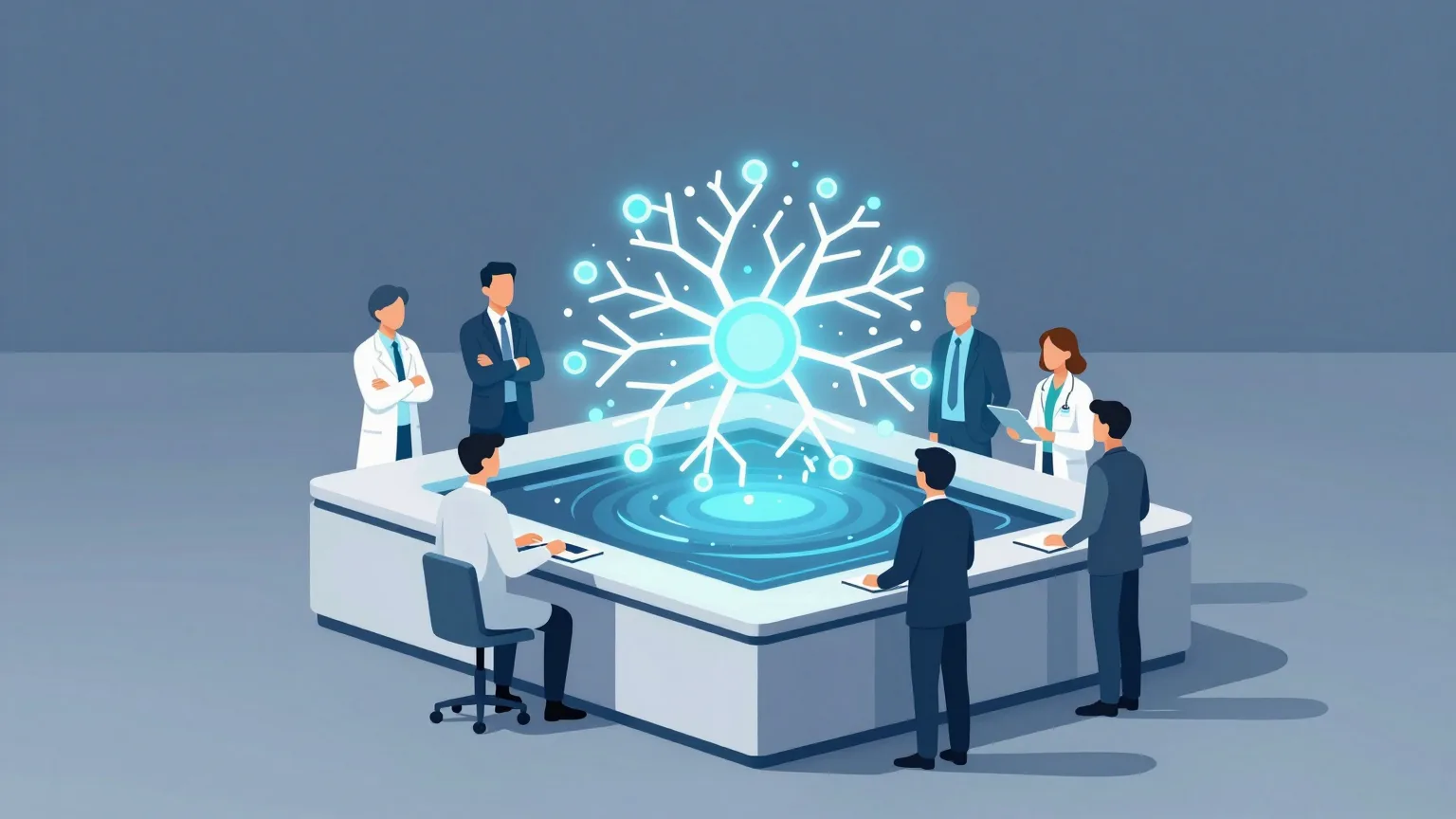
What's distinctive is the evaluators' position. Unlike today's external evaluators, embedded evaluators work inside the AI company with access at a level equivalent to employees. They can directly observe how a model takes shape during training, track the decisions that shape how models are built and deployed, and speak directly with staff. From that vantage point, they can assess how the company actually operates, verify whether safety commitments are being honored, and identify blind spots. Incident reporting, along with better-informed public explanations of benefits and risks, is also expected. Anthropic stressed that 'independent embedded evaluators do not lessen our accountability — they make it more verifiable,' and explicitly stated that responsibility for the safety of its models remains with Anthropic.
The scale is significant, too. The two companies expect to each invest at least $1 billion over the next five years in building capabilities in this area. According to [Bloomberg](https://www.bloomberg.com/news/articles/2026-09-18/anthropic-to-embed-evaluators-from-accenture-to-test-ai-safety), the evaluators will have access comparable to Anthropic employees and will conduct red teaming of the latest models, safeguards testing, and alignment assessments.
Embedded evaluation is a new mechanism, and the company itself acknowledges that the operational details are still being worked out. No standards exist for how much information evaluators should access, or for what and how they should report. There is also no established mechanism for funding independent evaluation; after citing its own argument in the 'Advanced AI Framework' (June) that pooled or government funding would be preferable in the long run, Anthropic noted that for now it will directly fund Accenture's activities. It is also in discussions with nonprofit evaluators such as METR about testing elements of embedded evaluation, each with their own funding. The partnership is non-exclusive: Anthropic plans to announce partnerships with other evaluators in the coming weeks, and Accenture will work with other AI developers in a similar role.
California Moves Toward Independent Auditors Inside AI Labs and a 'Kill Switch'
State-level moves advanced the same day. According to [The Decoder](https://the-decoder.com/california-governor-newsom-signs-executive-order-demanding-kill-switch-for-ai-models/), California Governor Gavin Newsom signed an executive order requiring independent auditors inside AI labs and a 'kill switch' for AI models. A panel of experts will deliver recommendations within two months. Governor Newsom reportedly sees it as a problem that no federal law currently obligates AI companies to report dangerous incidents.
If Anthropic's embedded evaluation is an 'industry voluntary initiative,' this one is a move to consider 'institutionalization within a public framework.' The two point in compatible directions. Whether independent eyes actually reach inside development is also a question that will determine the real-world effectiveness of the slowdown debate that has been reported over the past few days, and the recommendations due in two months deserve close attention.
False AI Report Nearly Triggered a US Military Intercept of a Chinese Ship — CNN
There was also coverage that seemed to illustrate exactly why institutionalizing safety is urgent. According to multiple outlets relaying a [CNN report](https://gcaptain.com/ai-error-nearly-triggered-u-s-intercept-of-chinese-ship-cnn-reports/), an AI error nearly caused the US military to intercept a Chinese ship. [RNZ](https://www.rnz.co.nz/news/world/1465265/ai-chatbot-s-false-report-nearly-sparked-war-with-china-sources-say) reported, citing sources, that 'an AI chatbot's false report nearly sparked a war with China.'
The information gathered so far remains at headline level, and this article cannot verify the details of when and how the incident occurred. That said, it was only yesterday that US and Chinese experts were reported to be working on 'common rules to exclude autonomous AI judgment from nuclear weapons operations.' If incidents in which misinformation and misjudgment are said to have nearly translated into actual military action are now being reported, the importance of designs that insert human verification — precisely in situations that demand fast judgment — only grows. We'll be waiting for further reporting.
Google's 'CC' and Muse for Mac — AI Agents Move Into the Home and the Desktop
The reach of consumer AI agents is widening, too. According to [TechCrunch](https://techcrunch.com/2026/09/18/googles-new-cc-is-an-ai-agent-that-helps-families-run-their-households/), Google has refocused its AI agent 'CC' on household coordination. When a family shares email, schedules, and tasks, the AI takes on calendar management, filling out forms, creating shopping lists, planning meals, and more.
A [TechCrunch](https://techcrunch.com/2026/09/18/metas-muse-hits-mac-letting-the-ai-take-actions-on-your-computer/) report the same day noted that Meta's 'Muse' is now available on the Mac. It works with files and apps and can take actions on the user's behalf. AI agents, once centered on smartphones, are now making a full-fledged push into both the shared space of the home and the desktop as a work environment. Family-level information sharing and delegated actions on the PC bring convenience, but they also raise new questions around privacy and permission design. What happens next will be worth watching closely.
Jev Picked Up by TechCrunch, Now Offered on the Lolipop! AI Gateway
Since its announcement last week, Jev — the 'AI that doesn't generate text' — had seen a string of hands-on articles in Japanese; now major overseas media are turning their eyes to it as well. [TechCrunch](https://techcrunch.com/2026/09/18/a-new-kind-of-ai-model-from-a-chatgpt-inventor-is-thrilling-developers/) reported that 'a new kind of AI model from one of ChatGPT's inventors is thrilling developers,' introducing it as pointing the way toward cheaper, faster software intelligence.
There are developments in Japan as well. According to [GMO Pepabo's announcement](https://zenn.dev/pepabo/articles/jev-lolipop-ai-gateway), Jev can now be invoked from the Lolipop! AI Gateway, and it is free to try through September 24. The company combined the AI Gateway's 'choose models by rules' mechanism with Jev and has published a routing experiment that delegates the selection of the LLM itself, according to the task, to Jev. In a further [shogi experiment](https://zenn.dev/pepabo/articles/jev-shogi-experiment), they passed the options as 'legal moves in a given position,' letting Jev play without a search engine to see how far it could win.
Last time, the focus was on real-world Japanese benchmark results (such as JNLI 87.0%); this time, with 'coverage in major media' and 'availability on a domestic gateway,' the practical-infrastructure side has come together. The design decision of where to embed a judgment-specialized model within an app is becoming more tangible.
AI Data Center Firm Nscale Files for IPO — Net Loss Tops $1 Billion in the First Half
Fundraising on the supply side is moving as well. According to [Bloomberg](https://www.bloomberg.com/news/articles/2026-09-18/nvidia-backed-data-center-firm-nscale-files-publicly-for-us-ipo), Nscale, a London-based AI data center company that counts Nvidia and Microsoft as partners, has filed for an IPO aimed at listing on the New York Stock Exchange. The funds raised will reportedly go toward investing in infrastructure to meet AI compute demand.
The financials are what draw the eye. According to SEC filings, in the six months through June 30 the company posted revenue of $140.6 million and a net loss of $1.02 billion. In the same period a year earlier, revenue was $10.4 million with a net loss of $368.9 million. Revenue grew roughly 13-fold, while losses expanded about three-fold. The pattern — front-loading capital investment to meet the 'limitless' nature of AI demand and raising the funds from the market — is now visible in the numbers. Whether these massive investments reach payback ties directly to the growth of AI service revenue.
---
Institutionalizing independent evaluation (both voluntary and publicly regulatory), AI false reports in a military context, agents spreading into the home and the PC, Jev as practical infrastructure comes together, and data centers raising funds through IPOs. As of September 19, the debate surrounding AI is shifting to a deeper layer — from 'the builders' promises' to 'mechanisms for verification and implementation.'