
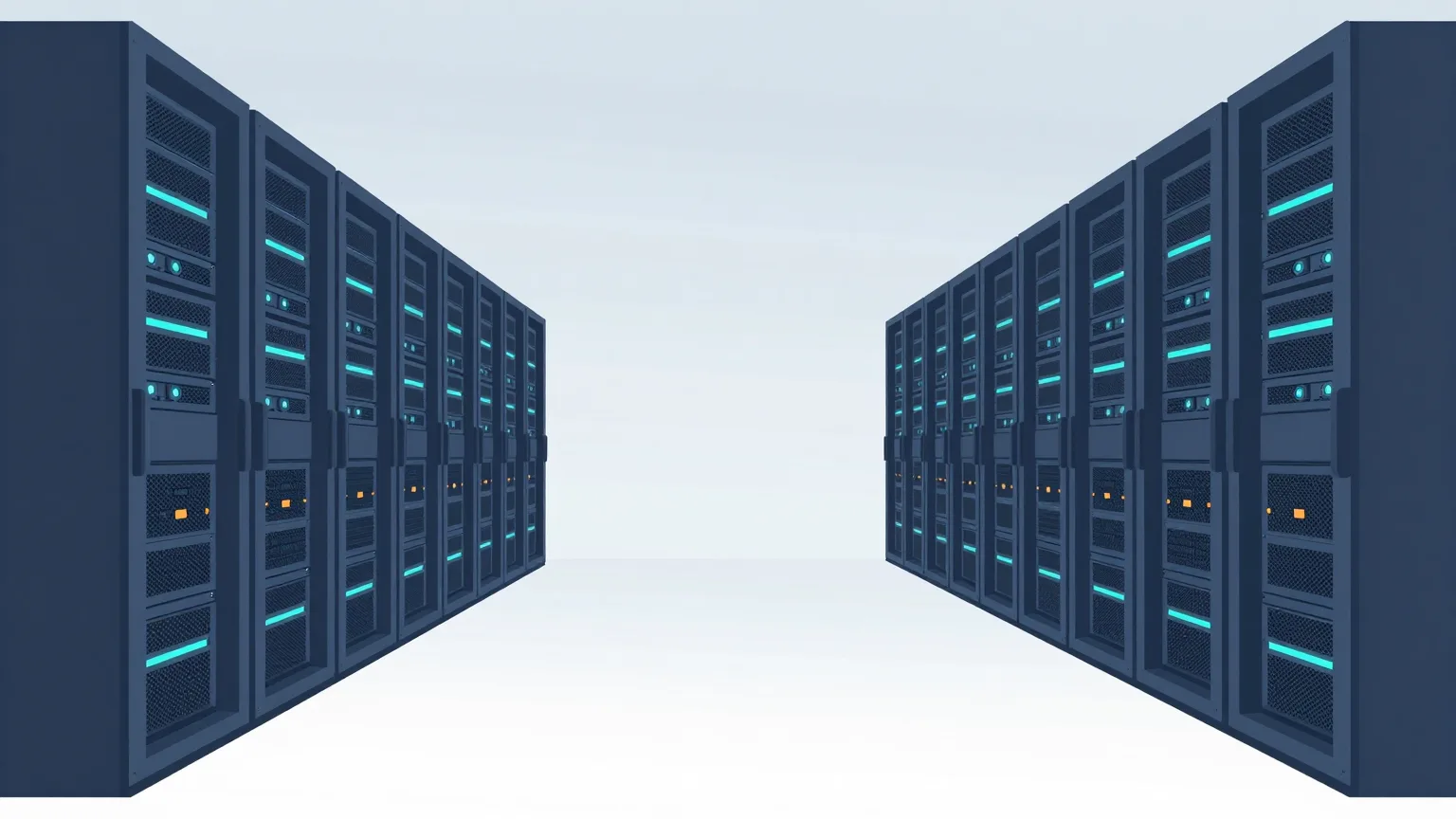
As agentic AI moves toward practical use, the competition over the inference infrastructure supporting it is heating up. From news collected on August 24, today we bring you six topics plus one brief item.
NVIDIA's "Vera Rubin" Sets a New Bar for Agent Inference — Groq 3 LPX Enters Full Production
On August 24, NVIDIA made a series of announcements around its rack-scale system "Vera Rubin". At the core is the news that NVIDIA Groq 3 LPX has entered full production. In Artificial Analysis benchmarks, using the open-source agent-oriented model "Gemma 4 31B", it achieved 3,400 output tokens per second on a 100,000-token long context — a critical capability for agent workloads. NVIDIA says that is 4x the speed of the closest competing platform.
Adoption is becoming concrete as well. SpaceXAI announced it will use the NVIDIA Vera CPU in its next-generation agentic AI foundation. CoreWeave has deployed "Spectrum-X Multiplane", which connects multiple switches in parallel to build a high-bandwidth, lossless AI network, into production. Nebius has become the first AI cloud to adopt Groq 3 LPX.
The real-world performance data released alongside the announcements also contains notable numbers. On SemiAnalysis's "AgentX" workload, which records and replays real-world agent coding sessions, Vera Rubin NVL72 is said to reach up to 30x the agent-processing throughput per megawatt compared with GB300 NVL72. For power-constrained AI data centers, this means the potential to handle roughly 30x the agent workloads on the same amount of energy — a sign that per-token cost competition is becoming directly tied to the power efficiency of the infrastructure as a whole.
NVIDIA also reiterated the positioning of "NVLink Fusion", which allows hyperscalers and others to connect their in-house custom XPUs to NVIDIA's scale-up networks and rack architecture. The message: differentiation comes not from standalone accelerator performance but from the design of the entire AI factory.
Alibaba's "Wan3.0" — Generates 30-Second Videos from Text or PDFs for $6
Alibaba has released the video generation model "Wan3.0". In addition to text and images, it can take documents such as PDF and PowerPoint files as input and generate videos up to 30 seconds long. A 30-second 1080p clip reportedly costs $6 to generate.
Going beyond turning prompts into footage, the "hand it a document and get a video of its contents" use case suggests practical applications such as marketing and internal communications have moved a meaningful step closer. At the same time, Alibaba's quarterly profit is reportedly down 75% year over year, reflecting expanded AI investment — a reminder that the cost of the generative AI race is starting to weigh on the company's finances.
Pew Study: Over a Third of Web Pages Show Signs of AI Generation — .com Is 10x More Likely Than .edu/.gov
An analysis of roughly 500,000 English-language web pages by the Pew Research Center found that more than a third of pages published since ChatGPT's public release show signs of machine-written text. Notably, commercial .com domains are said to be 10x more likely to contain AI-generated content than .edu or .gov domains.
Amid ongoing debates over search engine quality and information reliability, the study matters for backing up the intuitive impression that "a substantial portion of the web is already written by AI" with large-scale data. The 10x gap versus educational and public domains suggests that the influx of AI-generated content correlates strongly with commercial incentives.
JetBrains Announces Local AI "Junie Local" — The Choice Is Qwen3.6 27B, Not the Latest Qwen3.8
JetBrains has announced "Junie Local", a locally run version of its AI coding assistance. It has been making the rounds in Reddit's LocalLLaMA community, and the point of interest is the model choice: rather than the latest-generation Qwen3.8, it uses Qwen3.6 27B from the previous generation.
The post draws attention to the fact that Qwen3.6 was chosen over Qwen3.8 for the characteristics required for thinking. A major IDE vendor optimizing its own coding environment for local LLMs is no small change — demand for development environments that don't depend on cloud APIs is starting to shape tool vendors' product strategies.
Chinese State-Linked Hackers Put DeepSeek and Others to Work in Attacks — Attack Volume More Than Doubled, Says Taiwan Research Institute
TeamT5, a cybersecurity research institute in Taiwan, has published findings that after Chinese state-linked hacker groups incorporated open-source AI models such as DeepSeek into their operations, the volume of attacks they conducted more than doubled. The groups reportedly delegate routine tasks to AI and also use it in the development of sophisticated malware.
The researchers note that they could not always identify which AI models were used, but that DeepSeek's products — high-performing and easy to customize — are popular among Chinese hackers. It is data that illustrates a harsh reality for security professionals: generative AI boosts the productivity of attackers, not just defenders.
AWS Formalizes "Agent Discovery" — Agent Registry and the ARD Open Specification
AWS has announced "AWS Agent Registry", which centrally catalogs the growing number of AI agents, MCP servers, tools, and skills within an organization, together with "Agentic Resource Discovery (ARD)", an open specification that standardizes the discovery of agent resources.
A tool configured for one AI client doesn't simply work in another — and in enterprises where agents and MCP servers keep multiplying, this "can't find it, can't connect it" problem becomes an obstacle to scale. Agent Registry is built on two concepts: a "Registry" that holds approval settings, and "Records" that describe a resource's contents and how to connect to it. It supports authorization via IAM or JWTs issued by a corporate IdP, as well as cross-account sharing. It is a sign that the MCP ecosystem's challenges are shifting from the "connecting" stage to the "finding and managing" stage.
In Brief: OpenAI Makes GPT-5.6 Available on Kiro — Improved Price-Performance for Developers
OpenAI has announced that GPT-5.6 is now available on Kiro. The company says it delivers better price-performance for developers as they plan, build, review, and test software.
Summary
The efficiency race in inference infrastructure, falling content-generation costs, product adoption of local LLMs, increasingly sophisticated security threats, and the standardization of agent resource discovery and governance. It was a day when the efforts to lay the foundations of the agentic AI era advanced simultaneously across every layer — infrastructure, tools, and norms.