
It was a day marked by frontier model deployments to managed clouds and jockeying for leadership in enterprise AI. AWS began offering cross-region inference for OpenAI's GPT-5.6 on Amazon Bedrock, and Slack announced "Slack Code" for collaborating with AI coding agents. New data also surfaced showing OpenAI closing in on Anthropic among enterprise users. From Japan, SBI Holdings' company-wide partnership with Anthropic drew attention, and in the local LLM community, an effort to push Qwen3.8-27B to a peak of 381 tps on a single RTX 3090 caught the eye.
Cross-Region Inference for OpenAI's GPT-5.6 Now Available on AWS Bedrock
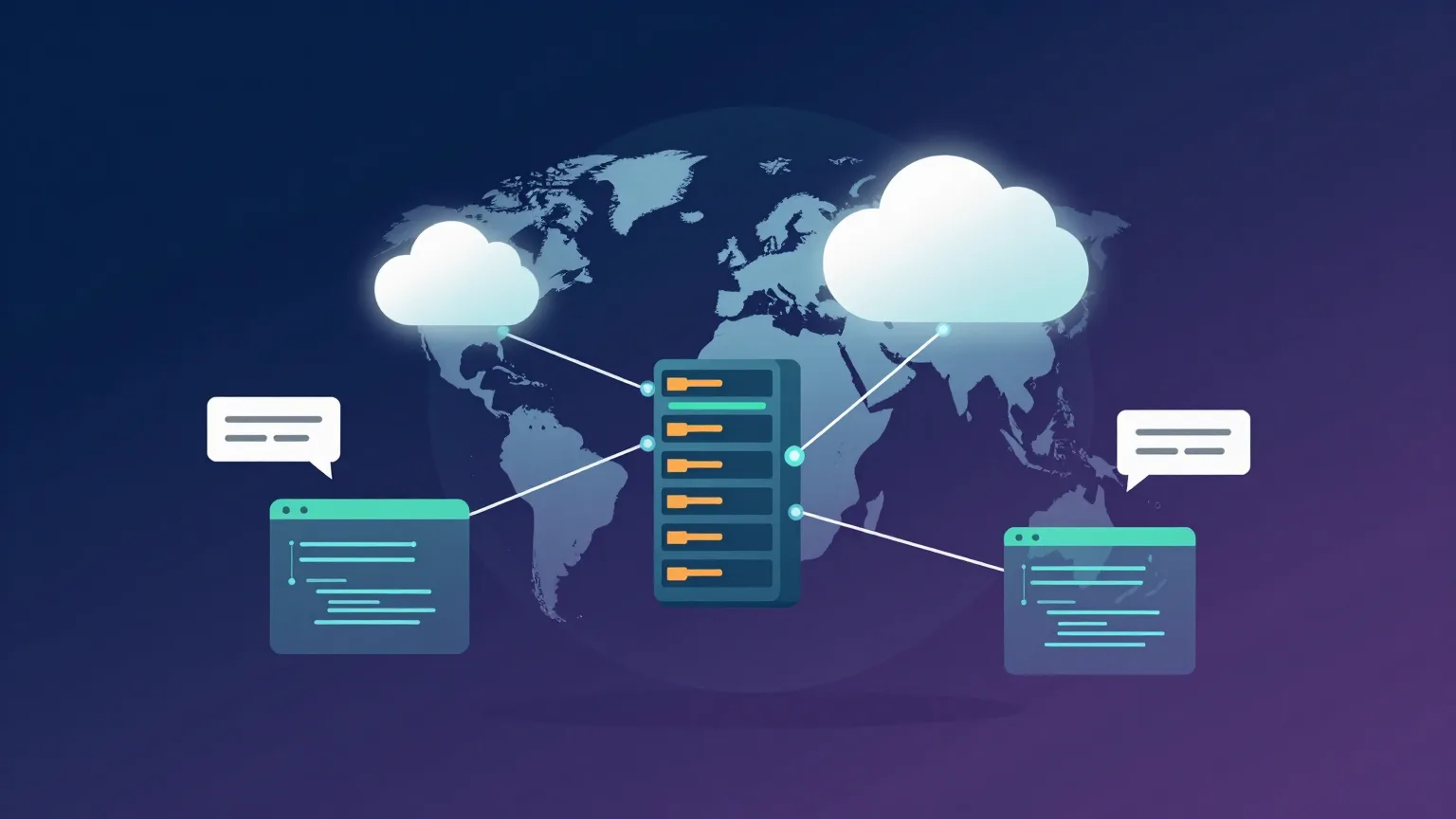
In an official blog post, AWS announced that Amazon Bedrock now offers OpenAI's GPT-5.6 models (three variants: Sol, Terra, and Luna) in more than 25 regions, with support for cross-region inference (CRIS).
Cross-region inference stabilizes throughput by routing requests to a broader pool of compute instead of tying them to a single region's capacity. With this launch, you can choose between two profile types depending on your needs: "geographic inference profiles," which keep processing within a single geography to meet data residency requirements (e.g., us.openai.gpt-5.6-terra), and "global inference profiles," which route based on real-time capacity across all supported commercial regions (e.g., global.openai.gpt-5.6-terra).
On the API side, the notable part is that GPT-5.6 natively speaks the formats of OpenAI's Responses API and Chat Completions API. Migration is as simple as pointing your existing OpenAI SDK clients at Bedrock's OpenAI-compatible endpoint and specifying an inference profile ID in the model parameters. Using "aws-bedrock-token-generator," which generates short-lived API keys (up to 12 hours) from your AWS credentials, also eliminates the need to store static keys. The models can be invoked via the Amazon Bedrock Converse API as well, and streaming is supported.
All three variants come with a 1-million-token context window and accept text and image inputs, plus support for reasoning modes, server-side tool calling, and prompt caching. Prompt caching offers both implicit and explicit modes, and cached read tokens do not count against your TPM quota—so workloads with long shared prefixes can cut both quota consumption and latency.
The quota design is also worth understanding. GPT-5.6's on-demand quotas are managed in TPM (tokens per minute), and output tokens burn through quota at a 10x rate. A request with 2,000 input tokens plus 1,000 output tokens consumes 12,000 tokens' worth of quota, meaning output-heavy workloads eat more quota than their raw token counts suggest. Geographic and global profiles draw from separate quota pools—switching between them changes which pool you consume. AWS recommends requesting a quota increase via the Service Quotas console before going to production.
On the security front, a zero-operator-access (ZOA) model enforced at the chip level means even AWS operators cannot access prompts or responses. At the same time, the documentation notes that for some models, including GPT-5.6, content flagged by automated abuse-detection classifiers may be retained for up to 30 days for offline abuse detection. For organizations running SCPs that restrict regions, global CRIS requests are evaluated as "region unspecified," so a design that exempts CRIS alone via the bedrock:InferenceProfileArn condition is recommended.
With OpenAI's frontier models now landing on a managed service—complete with documentation covering everything from data residency to quota operations—the choices of which model, on which platform, and under which governance framework have become even more composable. The launch looks squarely aimed at winning enterprise customers.
OpenAI Closes In on Anthropic in Enterprise Use — The Reality of "Switching" in Corporate AI Spend
New data reported by TechCrunch shows that the map of enterprise AI usage is far from settled. Among business users, OpenAI is closing in on Anthropic—and the outlet argues that the sheer volatility, with companies bouncing back and forth every time a lab releases a new model, should give both companies' investors reason to doubt the "stickiness" of enterprise AI spending.
The figures reflect a market where each model generation directly shakes up corporate procurement decisions. With vendor lock-in still weak and performance, pricing, and contract terms locked in fierce cycles of competition, how stably each company can build its enterprise AI revenue base remains a shared challenge.
Slack Announces "Slack Code" — Drive Claude, Devin, and More from Dedicated Channels
Slack has announced "Slack Code," a new feature for collaborating with AI coding agents as a team.
Mention an agent and a dedicated "code channel" is automatically created, where you can give instructions while reviewing the agent's plans, code diffs, and previews. Supported agents span multiple vendors, including Anthropic's Claude and Cognition's Devin, and the design inserts human approval before actions are executed, keeping progress safe.
The feature builds the code development workflow—plan review, diff review, and previews—directly into the chat tool where development discussions already flow every day. If coding agent usage spreads from "opening a dedicated dev environment" to "summoning one into the usual conversation," members outside the development team will likely have more opportunities to engage with AI agents.
ChatGPT Can Now Send Messages for You on Apple Messages — New Plugin
According to TechCrunch, a plugin integrating ChatGPT with Apple Messages has arrived, letting AI send messages on your behalf. True to its pitch—"Ever wanted someone to chat for you?"—it is an attempt to put ChatGPT to work as an automated ghostwriter for texts.
AI proxying in chat apps carries both convenience and the unease that comes from breaking the assumption that the sender is human. Reading accuracy that holds up in real use, and who bears responsibility when a message goes astray, are just some of the questions that will arise at the usage stage.
SBI Forges Company-Wide Partnership with Anthropic — "Son-san Is OpenAI, But I'm Anthropic"
Japanese players made headlines too. SBI Holdings announced a company-wide partnership with US-based Anthropic, the developer of Claude. In an interview with ITmedia, Chairman Yoshitaka Kitao said, "Masayoshi Son is OpenAI, but I'm Anthropic," naming AI adoption as the top-priority strategy for the foreseeable future and explaining how the company brought in specialists from outside.
Concrete numbers were on display as well: SBI Securities will invest 500 million yen in developing AI agents for customer support, expecting 2.7 billion yen in additional annual revenue through reactivating dormant accounts and other measures. Cases of a financial institution teaming up with a specific model vendor at company scale are still rare in Japan, and this one is drawing attention as a bellwether for generative AI adoption among major Japanese corporations.
Qwen3.8-27B at Up to 381 tps on an RTX 3090 — The Front Line of Local Inference Optimization
In the local LLM community, a record of inference engine optimizations for running Qwen3.8-27B on a single GeForce RTX 3090 has been drawing attention. According to the poster, an engine that managed 82 tps on a single request four days ago now reaches roughly 133 tps on real chat prompts—and a peak of 382 tps on workloads where the model reproduces its own context—after adopting DFlash2 drafting and lookup-augmented drafting.
The update hinges on two major changes. The first is longer verification blocks: stretching the verification block from the 7 tokens matching DFlash2's draft to 16 tokens per step, and filling the empty slots with lookups from the request's own context, improved document reproduction at 25k tokens from 260 to 382 tps, with about a 9% gain on ordinary chat as well. The second is int8 quantization of the KV cache, which doubled the long-context ceiling from 69,758 tokens with bf16 to 138,696 tokens.
What stands out is the candid disclosure of failures and limits. Long verification blocks help workloads where the output quotes the prompt, are roughly neutral otherwise, and roughly double time-to-first-token. The post states plainly that this is "a mode for RAG frontends and coding assistance that applies code edits—not the default." The author also corrected, in response to an issue about long-context numbers failing to reproduce, the fact that the earlier tables had been measured in a batch configuration without speculative decoding. Quality reportedly holds steady at 96.5% on GSM8K.
Around the same time, "Qwen3.8-27B-OBLITERATED," a derivative with refusal responses removed, also climbed the upper ranks of Hugging Face's trending list. Using a technique that blends the weights of two "surgeries" to offset capability loss, it reportedly retains 86.3% of the original model's MMLU performance. That said, removing refusals touches on provider terms of service and ethical judgment, so it demands careful handling.
While supply on the cloud side keeps expanding, relentless optimization on consumer GPUs continues to evolve as well. Securing throughput for high-end workloads and pursuing fully local self-sufficiency—alongside the fluidity of enterprise usage—the options for using AI keep widening in both directions.