
From the August 18 evening roundup. It was a day when the building blocks around agents came together at every layer: an open-weight GUI agent, a cross-industry plugin spec, and — on the domestic front — the release of an MCP for administrative procedures. Three stories of very different scale, side by side. Some interesting real-world cost data arrived as well.
Tencent's "UI-Mate-27B" — A 27B Open-Weight GUI Agent
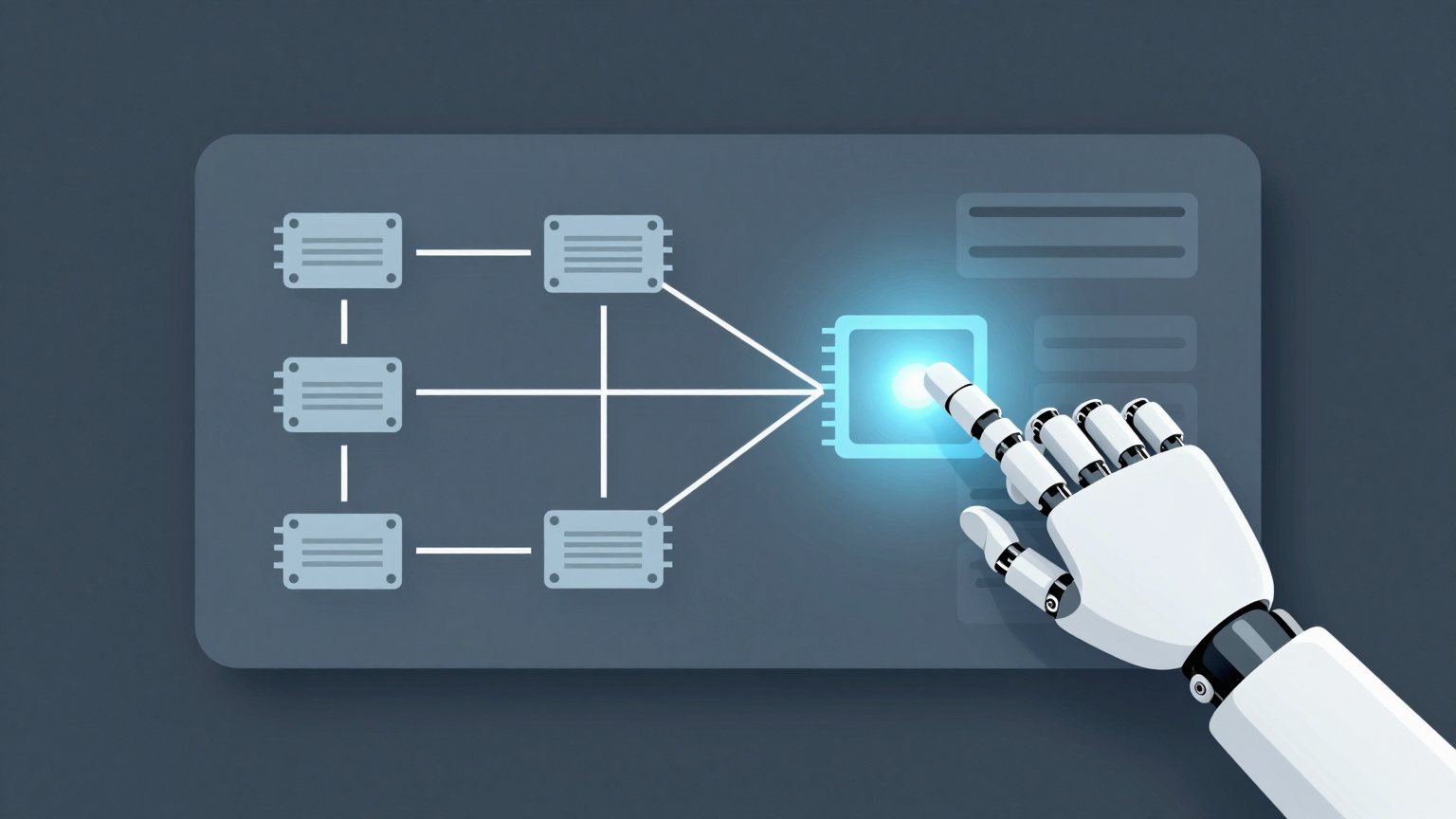
Tencent has released UI-Mate-27B, a foundation model for GUI agents that observes desktop screenshots and assembles mouse and keyboard actions. It is licensed under Apache-2.0 and built on Qwen3.6-27B.
Inputs are the task instruction, screenshots, and action history; outputs are the reasoning, a concise explanation of the action, and a structured computer-use tool call. The action space covers mouse, keyboard, scrolling, waiting, asking the user for confirmation, and task completion, and is pyautogui-compatible. Training reportedly consists of SFT followed by online reinforcement learning in an executable GUI environment.
What sets it apart are its two modes. In addition to standard computer use driven directly by natural-language instructions, it offers a demo-guided mode that extracts a reusable workflow from a single successful demonstration and re-plans while looking at the live screen even when the layout or app state changes. The selling point is grounding based on the live screen rather than recorded-and-replayed coordinates, and Tencent reports strong performance on benchmarks for both Ubuntu and Windows, plus the ability to carry out long-horizon tasks spanning multiple apps. It is also served via an OpenAI-compatible API.
LLM-based computer use is a hotly contested area, and the arrival of a 27B-class open-weight model that can hold up on long-horizon tasks means more options for users who want to run things locally or inside their own environment. For now, the evidence is mostly the model card and self-reported benchmarks; independent validation is still to come.
AWS, OpenAI, Microsoft and Others Publish the "Agent Plugins 1.0.0" Specification
On August 6, 2026, "Agent Plugins 1.0.0" was published — a package specification that bundles things like Agent Skills and MCP Servers into a single plugin usable across multiple agent clients. The official site describes the spec as a "portable package format." Representatives of AWS, Anysphere, GitHub, Microsoft, OpenAI, and Vercel took part in drafting it, and Google has made related announcements as well.
Why it matters: the mechanisms for adding capabilities to agents are currently split across multiple layers — MCP, Skills, and so on — and how they combine differs from client to client. If they can be bundled into a portable unit called a plugin, builders will be able to ship an asset they built once to multiple environments. A Japanese article analyzing the intent behind the official spec and each company's announcements has also been published.
Japan's Digital Agency Releases an MCP Server for Searching 75,000 Administrative Procedures in Natural Language
In August 2026, Japan's Digital Agency released an MCP server that makes roughly 75,000 (75,071) records from its inventory survey of administrative procedures analyzable in natural language. It is available on GitHub under the MIT license. The data covers the fiscal 2024 (Reiwa 6) survey results — procedures based on national statutes, organized by the ministry or agency in charge.
A hands-on article that ran it locally and asked an AI about child-rearing–related procedures reports being able to pull out information interactively that is hard to find through manual searching — for example, that birth registrations have already been moved online.
Searching administrative procedures is exactly the kind of task LLMs are good at: answering vague questions from structured data. Now that government data is being published in AI-native formats and starting to be used, it will be worth watching how much convenience improves for residents.
The Cost of AI Coding: 97.7% of Token Consumption Is Cache Reads
A new report based on real measurements aggregates four months (65 working days) of AI coding usage logs and finds that 97.7% of token consumption was cache reads — not output generation.
The interesting part is what the countermeasures actually achieved. The classic move — "switch to a cheaper model" — had almost no effect in practice; the only thing that worked was an operational change: "cut conversations short." And even that reverted within a month. There are caveats, such as the fixed-price plan, but the real data shows that the key to cost optimization lies somewhere other than where intuition suggests.
"Needle 2," a 14MB Tool-Calling Specialist
Cactus Compute's Needle 2 has been climbing GitHub Trending with 3,627 stars in a week. It has 45M parameters and a file size of 14MB — about the size of a single image. It specializes in tool calling (function calling) and reportedly runs with a single DLL, 37MB of RAM, and 0.5 seconds per call. Japanese-language processing, however, reportedly scored 0 out of 5. Aimed at edge devices and embedded use, it stands as an example of how a tiny model focused on one specific capability can be practical.
"SA-MRPO," a New Weighting Scheme for Multi-Reward RL
A research write-up that had been drawing attention on Hugging Face Daily Papers. Existing methods, which scalarize multiple reward objectives as a fixed-weight sum before training, keep spending learning budget on objectives that have already been achieved. SA-MRPO (Saturation Aware Advantage Reweighting for Multi-Reward Policy Optimization) standardizes each reward independently and discounts contributions via batch-level saturation estimates, dynamically redirecting optimization effort toward the objectives that still have headroom.
In mathematical reasoning comparisons it beats GDPO on hard correct-answer targets in 12 of 15 cases, with up to 5% improvement on AIME24. In adaptive reasoning it improves all five benchmarks by an average of 3.8% (up to 9.2% on AMC23), and it reports gains of up to 2.3% on coding as well. This is the kind of insight that directly affects reward design in RL post-training.
Wrap-Up
Today's haul left the impression that the "componentization" of the agent ecosystem has advanced another step. The model that does the operating (UI-Mate), the spec for distributing capabilities (Agent Plugins), and the massive data source (the administrative-procedures MCP) are each being built out on separate layers. With calm, measurement-based cost analyses also on the rise, we may be entering the stage after the hype.