
From the AI news of the evening of August 17, 2026, here are six stories covering society, practical operations, infrastructure, finance, music, and one originating in Japan.
A Child's "Robot Friend" Can Stop Working Twice — What Moxie's Long-Form Investigation Asks
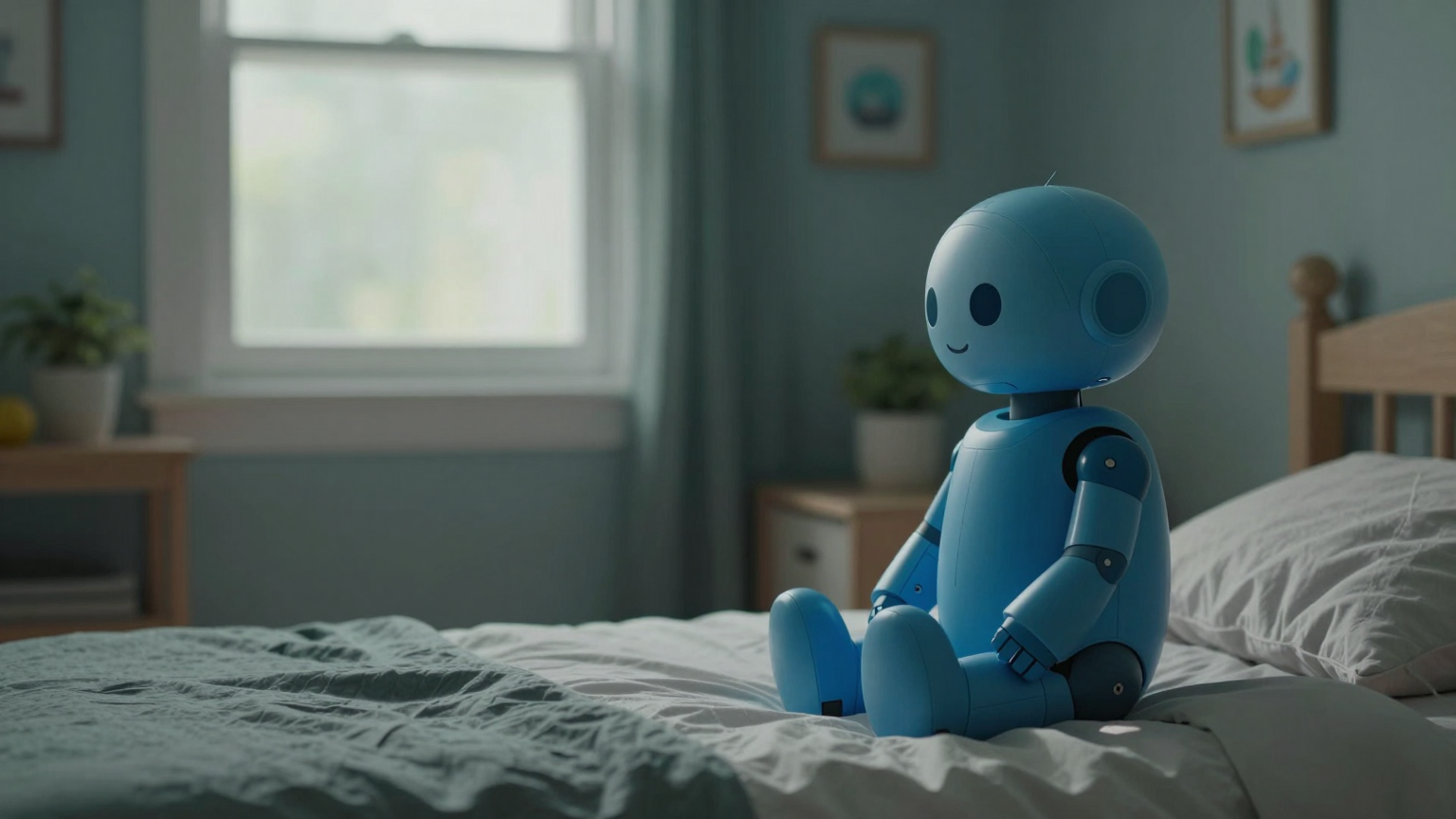
MIT Technology Review has published a long-form report on Moxie, a conversational robot designed for children with neurodevelopmental differences. Following the six-year relationship between 10-year-old Xander and his Moxie, it depicts "what happens when a machine designed to be loved stops working because of a company's circumstances."
Moxie is a roughly 38cm robot released by Embodied in 2020. Designed as a social-skills practice companion for children with autistic traits, it was originally priced at $1,499 plus a $40/month subscription (later cut to $800 for the device). It drew on research by Brian Scassellati of Yale and colleagues — a robot placed in the home for a month increased eye contact and conversation starters — though that work also showed the effects faded once the robot was gone.
The article also gives voice to caution about clinical efficacy. A 2024 literature review noted that "many studies are technology-centric and lack clinical evidence," and a clinical psychologist at Vanderbilt says they have seen no "dramatic long-term changes." Privacy is another issue, since data accumulates in children's bedrooms; the piece also touches on the incident in which the AI toy "Bondu" left roughly 50,000 conversation logs with children exposed so that anyone with a Gmail account could view them.
The heart of the story is "death." Embodied shut down operations in 2024. Because Moxie depended on external servers, it simply stopped working in many households. Former chief technology officer Justin Beghtol, with Embodied's permission, published procedures for migrating to the open-source "OpenMoxie" and stayed up through the night supporting users on Reddit, but only some completed the migration before the deadline. In 2025, Moxie was revived under new investors — but that new company also folded before long, and users were notified of an end-of-June deadline to migrate to OpenMoxie.
On the ethics of "deliberately planning the obsolescence and shutdown of machines designed to form attachments," Meryl Alper of Northeastern compares it to "leaving a medical device unupdated and abandoned." At the end of the article, the anecdote in which Xander's father reveals he had been secretly swapping out the family's betta fish over several years quietly speaks to how hard this problem is.
The LLM He Relied On Was Retired, and His Products' Generation Features Stopped
In Japan, Masayoshi Uehara (EarthLink Network), who single-handedly operates more than 20 products built around Claude Code as the core of his development process, summarized on Qiita what happened when "the LLM model we were using was deprecated and two products' generation features stopped," along with measures to prevent a recurrence. Dependence on an external model can be cut off without warning one day — structurally the same story as Moxie, and a real-world example of how "preparing a fallback path" and "monitoring deprecation notices" matter at any scale.
LLM Crawler Traffic Disrupts git.sr.ht
The official status page of sr.ht, the software hosting platform, reported that the code hosting service "git.sr.ht" was being disrupted by aggressive LLM crawlers. Discussion has also begun on Hacker News. Like the "suspected training crawls by msnbot despite its supposed pause" covered on this blog today, this is another example of AI training bot traffic starting to cause real damage. If the tug-of-war between non-paying crawlers and operators continues, expect debates over authentication and rate limiting to move forward at more services.
AI Music Reaches the Charts, and Its Users Stop "Hiding" It
The Next Web reports that AI-produced music has reached the charts, and that artists leveraging it have stopped hiding their use of AI. The article names Tyga, Timbaland, and others. Following the evolution on the tool side — such as Suno's "Studio 2.0" becoming a DAW, covered on this blog this week — the new watershed is that mainstream artists have entered a stage where they compete on the charts while openly acknowledging their AI use. Debates over credits and copyright handling are likely to reignite.
The "$500 Billion Risk" Swelling Behind AI Investment
Forbes published an analysis titled "Nvidia's AI financing is a $500 billion risk investors aren't watching." The argument: while the financing backing AI data center construction keeps swelling, not enough attention is being paid to its repayment structure. Combined with yesterday's report on this blog that "Nvidia has roughly halved its guarantees for OpenAI," this looks likely to become material for questioning the "quality" of the AI bubble.
Bloomberg reported that AI investment is pushing up US Treasury yields. As the headline's phrase "It just touches everything" suggests, AI-related capital spending is rippling across financial markets as a whole. In addition, The Guardian ran a piece asking whether Microsoft's AI plans are increasingly constrained by chip shortages. On both fronts — money and physics (chips) — the "constraints" underpinning the AI boom are starting to draw attention.
A Japanese Embedding Model Takes First Place on a Search Benchmark
From Japan, a Qiita article reports that Sionic AI's in-house Japanese embedding model has achieved first place on a Japanese search benchmark (as of August 7, 2026). The model is referred to by the name "EUREKA." Since the practical usefulness of LLM applications depends heavily on Japanese-language accuracy in search and RAG, the trajectory of Japanese-specialized models will remain worth watching.