
Here's a roundup of notable AI news from Japan and abroad (as of noon JST on August 28, 2026).
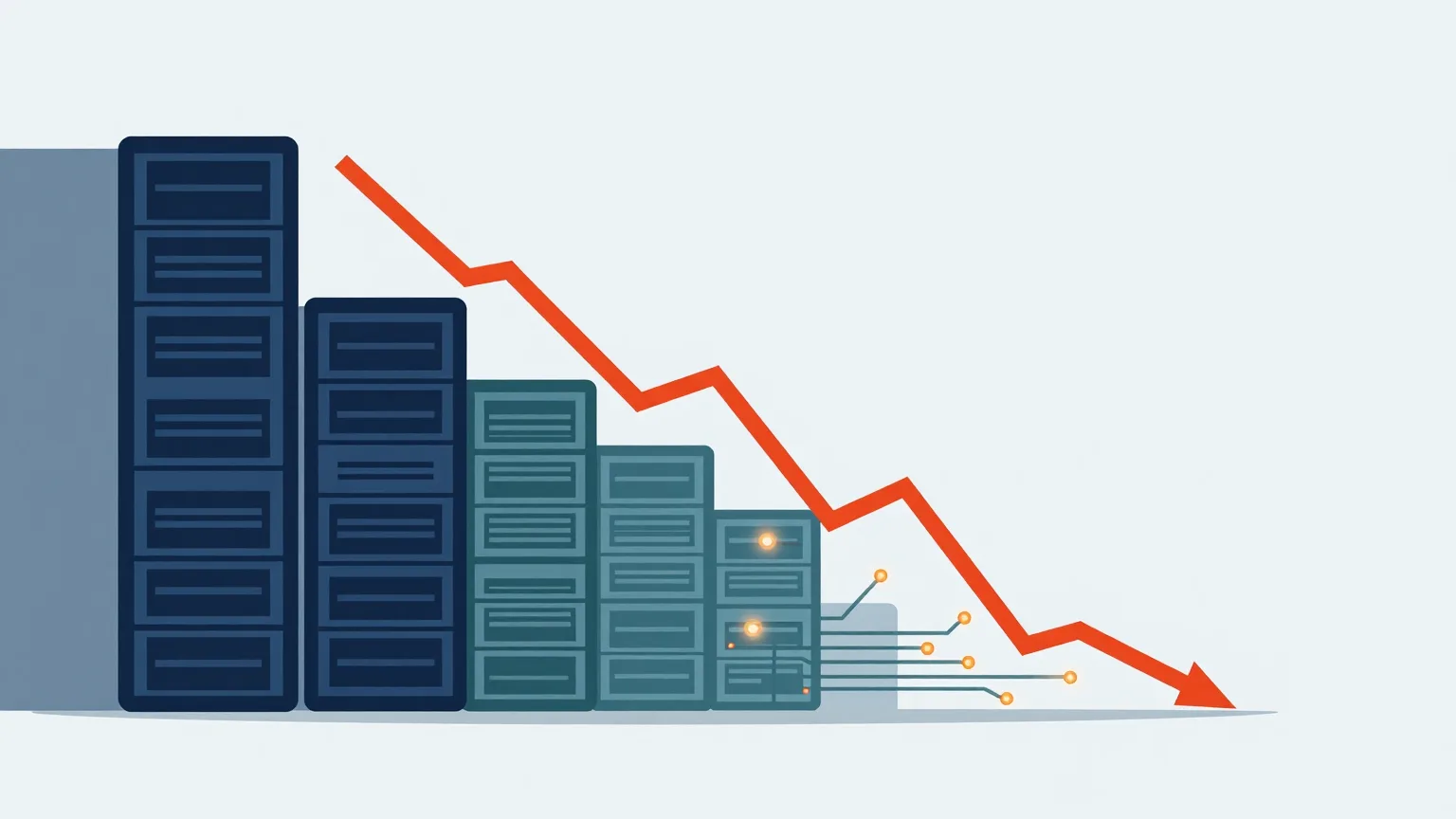
Alphabet Stock Plunges on Mounting AI Costs ── Roughly $700 Billion Wiped Off Its Market Cap
A report from the US outlet Semafor, shared on Hacker News, is drawing attention. According to the report, Alphabet's stock price plunged against a backdrop of mounting AI-related costs, wiping out roughly $700 billion in market capitalization.
Investment in the data centers, semiconductors, and power that underpin generative AI has expanded by orders of magnitude over the past few years, and when — or whether — these massive upfront investments will be recouped as revenue has become a recurring point of contention across big tech earnings reports. This selloff suggests that such wariness is starting to shape risk perception across the market as a whole, beyond individual companies' earnings moments.
Evolution Strategies Offer Broader Reasoning Coverage Than GRPO ── Untangling LLM Reasoning Post-Training
Hugging Face Daily Papers has featured research that systematically examines the optimization behavior when Evolution Strategies (ES) are applied to LLM reasoning post-training. ES has drawn attention in recent years as a memory-efficient post-training method, but the extent of its advantages over the mainstream GRPO (Group Relative Policy Optimization) had not been well understood theoretically.
First, the study established both theoretically and empirically that ES holds performance advantages over GRPO. The "entropy collapse" seen in GRPO does not occur with ES: while improving Pass@1, ES also achieves higher Pass@K than GRPO, drawing out more of a pretrained model's reasoning ability. The work also shows that within-population Jensen–Shannon diversity, projected onto the verifier, contributes to Pass@K gains. The authors further propose a sequential training strategy (sequential GRPO–ES) that first tunes Pass@1 with GRPO and then extends Pass@K with ES.
What's particularly interesting is that although ES moves parameters substantially across the entire model, the updates that actually drive performance gains form a sparse subset of the large updates. Large parameter shifts do not necessarily translate into broad functional changes, and holdout evaluations showed no catastrophic forgetting either. The paper also yields hyperparameter design guidelines, such as the finding that larger LLMs work with smaller population sizes. All told, ES looks set to be reevaluated not as an "inferior substitute for saving memory" but as a distinct reasoning post-training paradigm in its own right.
"UrbanGround" Evaluates Agents in a Real-Scale City ── Measuring Spatial Agency in a 3D Replica of Hong Kong
Also on Hugging Face Daily Papers, "UrbanGround" has been released, turning a real-scale city into a sandbox for agent evaluation. Agents can explore a geographically aligned 3D replica of Hong Kong from a first-person perspective, with multimodal LLM agents plugging in to run closed-loop perception and physical control. It can evaluate visual grounding, navigation, exploration, planning, and adaptation, and it supports testing under dynamic changes such as different times of day, weather conditions, road closures, and moving pedestrians.
The experiments make the current balance of power among MLLMs clear. They are already strong at local urban perception tasks, but that strength does not necessarily translate into long-horizon spatial agency. The longer and more complex the navigation, the more small spatial errors accumulate and the more likely agents are to fail to recover, with dynamic changes such as road closures and pedestrian movement proving especially difficult. Along with the sandbox itself (web and native builds), the evaluation code and tasks have also been released, so it looks likely to gain traction as a benchmark environment for embodied AI research.
A QAT Q2 Build of Qwen3.8-27B ── 200K Context on a 12GB GPU with 13–14GB of RAM
In the local LLM community, a QAT (quantization-aware training) Q2 build of Qwen3.8-27B is making waves. According to a post on Reddit's r/LocalLLaMA, combining the quantized build "qwen3.8-27B-qat-q2_0-gguf" with a DFlash2-derived Q2_K_S-MIX variant and Q5 quantization of the KV cache keeps RAM usage around 13–14GB even with contexts up to 200K tokens. The poster notes it also fits on a 12GB GPU if you trim the context down to around 100K.
The poster describes the quality degradation in the QAT Q2 build as "very minor," remarking that "it's a truly amazing era when a 12GB card can run a model more capable than Sonnet 4.6." Bear in mind, though, that this is one person's subjective impression, not a benchmark result. As we covered on this blog on August 26 with the fully quantized NVFP4 build (19.7GB) and the 3-bit quantized variants, efforts to run 27B-class models on small hardware keep improving — and the options for local deployment have just gotten wider again.
Claude Code v2.1.248 ── A "--restricted" Mode and Per-Agent Cache TTL Settings
Now for a topic aimed at developers in Japan. A summary of the changes in Claude Code v2.1.248 has been published on Qiita. According to the summary, this release is more than a routine patch: it includes a new "--restricted" mode for stronger security, per-agent prompt cache TTL settings, and Bedrock/Vertex-related support.
The more automation advances — agents included — the more the practical question becomes how tightly to restrict permissions for command execution and file access. In that sense, having more ways to specify restrictions as a launch mode is welcome. And being able to tune prompt cache TTL per agent should make it easier to maintain cache hits during long-running autonomous executions, improving efficiency on both cost and speed. See the original article for the detailed behavior.
Parallel Multi-Reviewer Execution with Google ADK 2.0 (Fan-out / Fan-in) ── A Hands-On Article from Japan
Also on Qiita, a hands-on article has been published on running multiple reviewer agents in parallel using Google ADK 2.0's graph workflows. In a previous article, the author built a sequential-plus-conditional workflow of "draft generation → character count check"; this time, they extend it so that multiple reviewers check the draft in parallel, sending it back for revision whenever issues are raised.
The generate → review → send-back loop is a classic pattern in agent development, and with a Fan-out/Fan-in setup that parallelizes reviews, adding more review perspectives barely lengthens the total time. How ADK 2.0's graph configuration expresses this kind of control flow should prove instructive even for those using other frameworks.