
Here's a roundup of AI news collected on August 23, 2026, focusing on a headline-making feat by a humanoid robot along with big tech's fundraising and reorganization moves.
Humanoid Robot Covers 100m in 9.39 Seconds — Reported Time Beats Bolt's Human Record
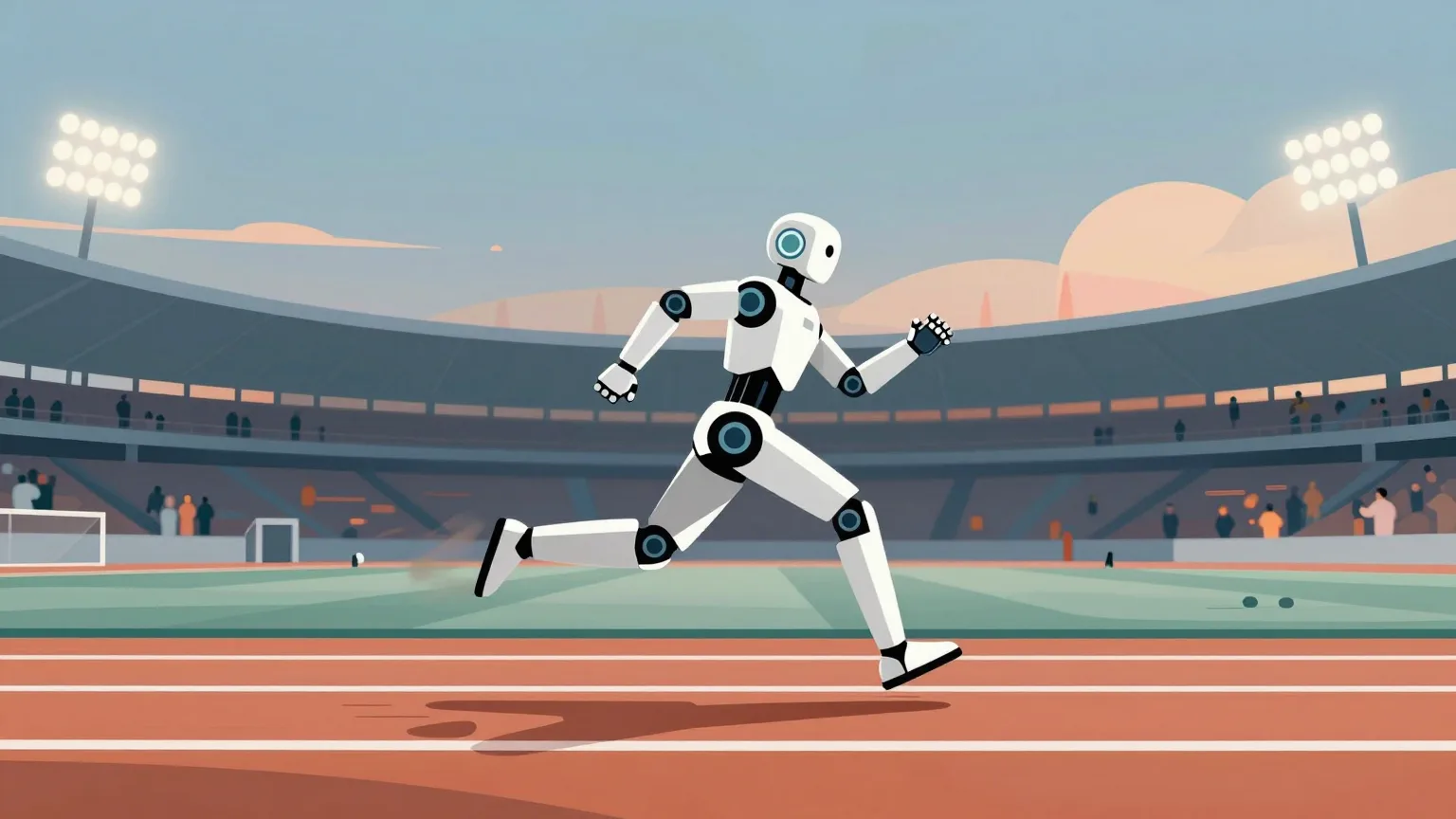
At the opening ceremony of the 2nd World Humanoid Robot Games, which kicked off in Beijing, a humanoid robot ran 100m in 9.39 seconds — beating the human world record of 9.58 seconds held by Usain Bolt — according to Xinhua News Agency. The time is based on press reports, and whether it was measured under the same conditions as official athletics records is another matter. Even so, the moment is drawing attention as a symbolic milestone: a humanoid robot posting a faster number than the fastest human ever.
The games themselves have also grown dramatically since the previous edition. This second edition features a program of 51 events and 1,301 competitions, drawing 666 teams and 2,056 humanoid robots from around the world — a 138% increase in team count over the inaugural games. The number of participating teams more than doubling in a single year looks like a barometer of humanoid robot development shifting into industrial gear.
Alibaba Sells About $10.2 Billion in Shares — Major Fundraising for Its Transformation into an "AI Company"
Alibaba Group is moving ahead with a share sale worth roughly HK$80 billion (about $10.2 billion). According to deal terms obtained by Bloomberg, the company is offering 710 million shares at HK$112.7 apiece, a 3.6% discount to Friday's closing price of its American Depositary Receipts (ADRs). Having pivoted from online retail giant to "AI player," the company is positioning the raise as funding to get serious about the global battle for AI dominance. A raise of this magnitude — on the order of a trillion yen — underscores just how big a bet China's tech giants are placing on AI.
DeepSeek Scraps Weekend Peak Pricing — Saturday and Sunday Usage Now Always Billed at Off-Peak Rates
DeepSeek has announced that, starting August 23, it will abolish the weekend peak/off-peak pricing tiers for API usage. From then on, Saturday and Sunday usage will always be billed at off-peak rates. The new rule takes effect at 00:00 Beijing time on August 23, and any costs incurred before that will be settled under the previous pricing schedule. For developers who tend to run batch jobs or long agent sessions over the weekend, it's a practical change that translates directly into cost savings.
Anthropic Hires a Heavyweight from Google's TPU Development — A Step Toward In-House Silicon
Anthropic has announced that it hired Amir Salek, one of the founding members of Google's custom chip program, onto its compute team. Salek led Google's Tensor Processing Unit (TPU) business until 2022 and has a track record of shipping TPUs from the first generation through the seventh. At Anthropic, the company behind Claude, he will work directly under James Bradbury in a newly created role. The move is reported to be groundwork for the company's push into its own semiconductors, and — amid continued dependence on NVIDIA for GPU procurement — it stands out as one more sign of major AI labs moving to bring compute in-house.
Apple Cuts Staff Around Siri and Vision Pro — A Restructuring Toward "New Devices and AI"
Apple is moving forward with layoffs centered on the teams in charge of Siri and Vision Pro. According to Bloomberg, the cuts also reach teams working on Vision Pro's Immersive Video and games, and layoffs have reportedly hit the "Intelligent Systems Experience" team within the software engineering organization, which handles some of the devices' AI features. The move is positioned as a restructuring to "focus on new devices and AI," and it suggests the company is slimming down the organizations around existing products to redirect resources toward its next move.
[Japan] Why an AI-Written GitHub Actions CI Went "5 Months Without a Single Error"
A post on Qiita details the experience of a personal repository's CI going five months without producing a single error. The CI wasn't written by the author — it was generated by AI — and on closer inspection, it turned out to be written in a way that "couldn't fail no matter what happened." The author candidly looks back: "Rather than reviewing and approving it, I just glanced at the output and called it done." A CI that stays green and a CI that performs meaningful verification are two different things — an obvious point, but one that becomes truly important precisely in an era when AI coding is the norm. A thought-provoking read.